


Medical-Grade SMS & SMMS Nonwoven Fabric — Engineered for Healthcare Environments
Olefins Private Limited manufactures medical-grade SMS and SMMS nonwoven fabrics that meet the barrier, sterility, and biocompatibility requirements of global healthcare product manufacturers. From Level 1 isolation gowns to Level 3 surgical drapes, our medical fabrics deliver the performance your products and your patients demand.
Medical Fabric Products
| Product | GSM Range | AAMI Level | Hydrostatic Head (AATCC 127) | Key Applications |
|---|---|---|---|---|
| SMS — Light Medical | 25-45 GSM | Level 1-2 | L2: ≥20 cm H₂O | Isolation gowns, surgical caps, shoe covers |
| SMMS — Standard Medical (Surgical Gowns) | 35-55 GSM | Level 2-3 | L3: ≥50 cm H₂O | Surgical gowns, drapes, sterile wraps |
| SMMS — High Barrier | 40-60 GSM | Level 3-4 | ≥50 cm H₂O + Blood/Viral barrier for L4 | High-fluid surgical gowns, Type 5/6 PPE Coveralls |
| Spunbond — PPE Components | 20-30 GSM | Base layer | Spray Rating ≥3 (ISO 4920) | Face mask layers, medical caps, coverall lining |
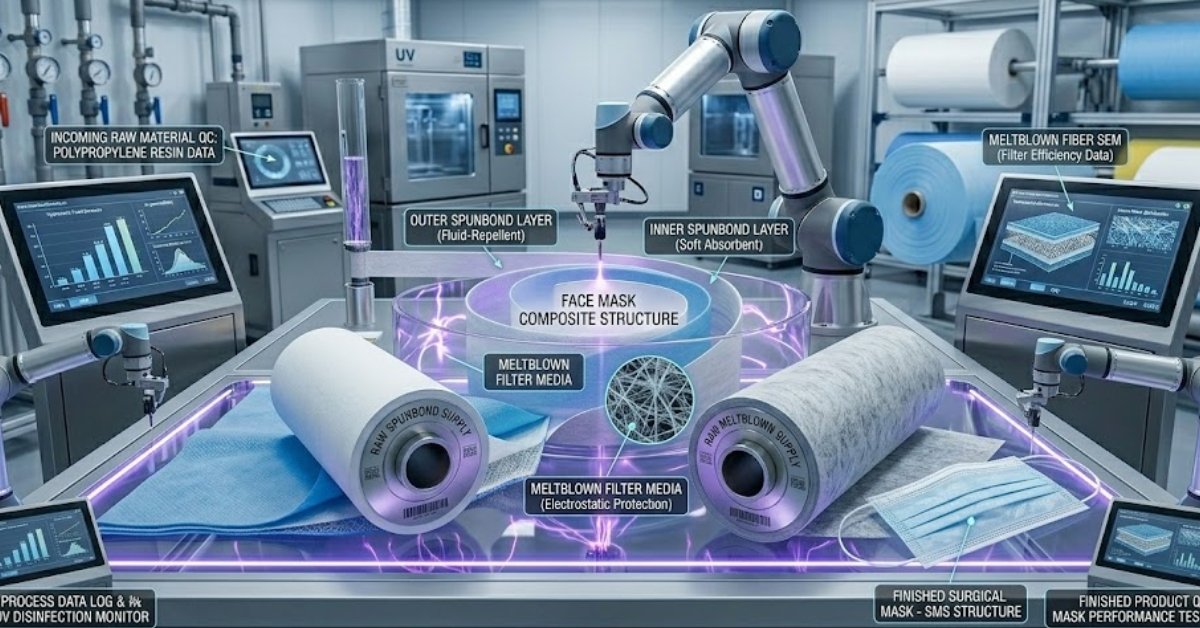
SMS (S-M-S) is a three-layer construction and SMMS (S-M-M-S) adds a second meltblown layer for higher barrier uniformity at the same GSM. Specify SMS for Level 1-2 isolation and SMMS for Level 3 surgical gowns where ≥50 cm H2O is required — see our full SMS vs SMMS difference guide for specs, hydrostatic head and cost. For full GSM specifications across hygiene, medical and PPE applications, see GSM Nonwoven Fabric Guide.
For a technical comparison of fabric constructions, see our spunbond vs spunmelt guide.
Compliance & Standards
- Fabrics tested against ASTM F1670 synthetic blood penetration standard.
- Hydrostatic head pressure tested per EN 20811.
- Bacterial filtration efficiency (BFE) data available on request.
- Biocompatibility — materials comply with REACH regulations.
- Test reports and material safety data sheets provided with every order.
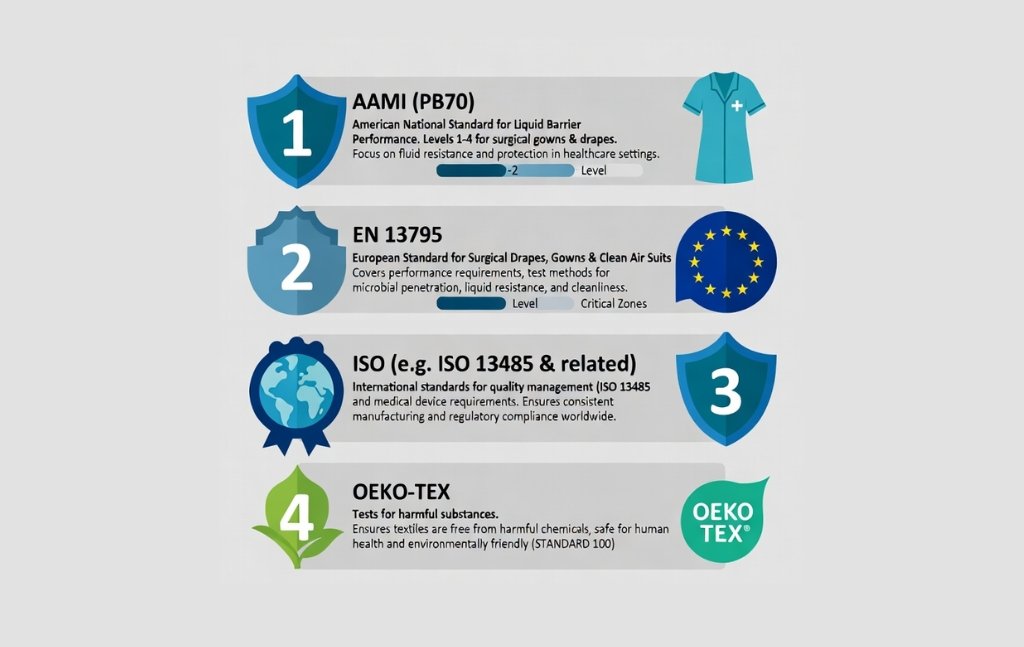
AAMI PB70 Barrier Levels and Matching Fabric Specification
| AAMI Level | Typical Application | Construction | GSM | Hydrostatic Head |
|---|---|---|---|---|
| Level 1 | Visitor gowns, basic isolation, minimal fluid risk | Spunbond or light SMS | 20-35 | Low |
| Level 2 | Isolation gowns, low-fluid procedures, blood draw | SMS | 35-45 | >20 cm H2O |
| Level 3 | Surgical gowns, arthroscopy, moderate fluid exposure | SMMS | 45-60 | >50 cm H2O |
| Level 4 | Critical zones, high fluid and pathogen exposure | SMMS or film laminate | 60-70 | Requires ASTM F1671 pass |
Barrier level is a property of the finished garment, not the fabric alone. Olefins supplies fabric with the test data needed to support your garment certification.
Certification & Documentation
Olefins supplies medical-grade nonwoven fabric with full lot-level test documentation covering GSM (ISO 9073-1), tensile strength (ISO 9073-3), hydrostatic head (EN 20811) and synthetic blood penetration resistance (ASTM F1670). We provide complete test reports and material safety data sheets with every order to support your garment-level AAMI PB70, EN 13795, or FDA 510k submission. Full detail is in our guide to medical nonwoven fabric certifications.
Medical Nonwoven Fabric — Frequently Asked Questions
- What AAMI level do I need for a surgical gown?
Level 3 is the minimum for moderate fluid exposure in surgery. Level 4 is required for high-risk procedures with known pathogen exposure. The exact level is specified by your hospital or device regulator. We supply SMMS 45-60 GSM for Level 3, and SMMS 60-70 GSM or film laminate for Level 4, with ASTM F1671 test data.
- Can Olefins provide fabric for EO or gamma sterilisation?
Yes. Our SMS and SMMS fabrics are compatible with ethylene oxide (EO) and gamma irradiation sterilisation. We provide post-sterilisation test data on request to support your sterile barrier system validation.
- Do you hold ISO 13485 certification?
Olefins is ISO 9001:2015 certified for quality management. We do not hold ISO 13485. We supply fabric with full lot-level test data — GSM, tensile, hydrostatic head, and ASTM F1670 — for your garment-level ISO 13485 or FDA 510k submission.
- What is the difference between AAMI PB70 and EN 13795?
AAMI PB70 is the US standard that defines barrier levels 1-4 based on water resistance and blood penetration. EN 13795 is the European standard for surgical gowns and drapes, with "Standard" and "High Performance" classifications. The test methods overlap. We supply data for both standards on request.
Related guide: hydrophilic vs hydrophobic nonwoven explained for diapers and wipes.

Contact: info@olefins.net | WhatsApp: +92 316 2055400 Specify your required AAMI level, GSM, width, and quantity. We provide test data with every sample. Get a medical fabric quote today. |