



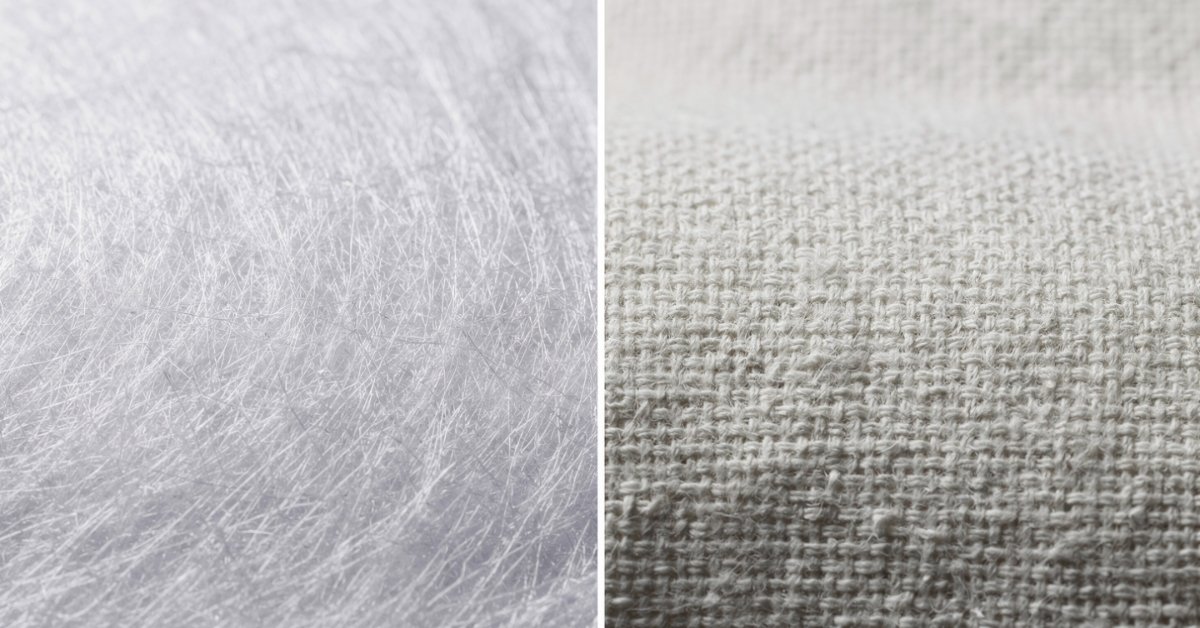
Woven fabric is made by interlacing two sets of yarn at right angles on a loom. Non-woven fabric skips yarn and weaving entirely: fibres are laid into a web and bonded together by heat, pressure, chemicals or mechanical entanglement.
That single difference in construction drives everything else. Woven fabric is stronger, more durable and reusable, which is why it is used for clothing, bed linen and upholstery. Non-woven fabric is faster and far cheaper to produce and can be engineered for properties woven fabric cannot easily achieve — liquid barrier, bacterial filtration, controlled porosity — which is why it dominates disposable and technical applications: diapers, surgical gowns, face masks, wet wipes, geotextiles and crop covers.
If you are choosing between them for a product, the practical question is usually not “which is better” but “how many times will this be used?” Non-woven wins on single-use and short-life applications. Woven wins on anything that must survive repeated laundering and mechanical stress.
Woven vs Non-Woven Fabric — Quick Answer
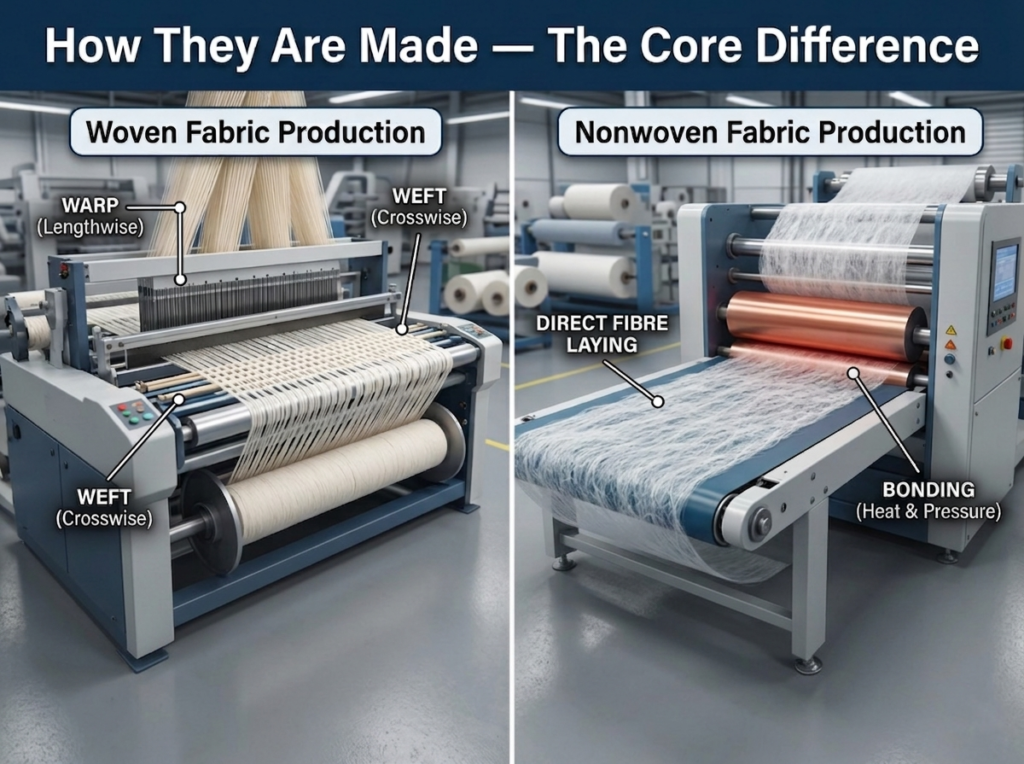
Woven fabric is made by interlacing two sets of yarns — the warp (lengthwise) and the weft (crosswise) — on a loom. Non-woven fabric skips the spinning and weaving steps entirely: fibres or filaments are directly laid into a web and bonded together through heat, pressure, or chemical processes — producing a flat sheet structure without any yarn interlacing.
How They Are Made — The Core Difference
The Warp and Weft Principle (Woven)
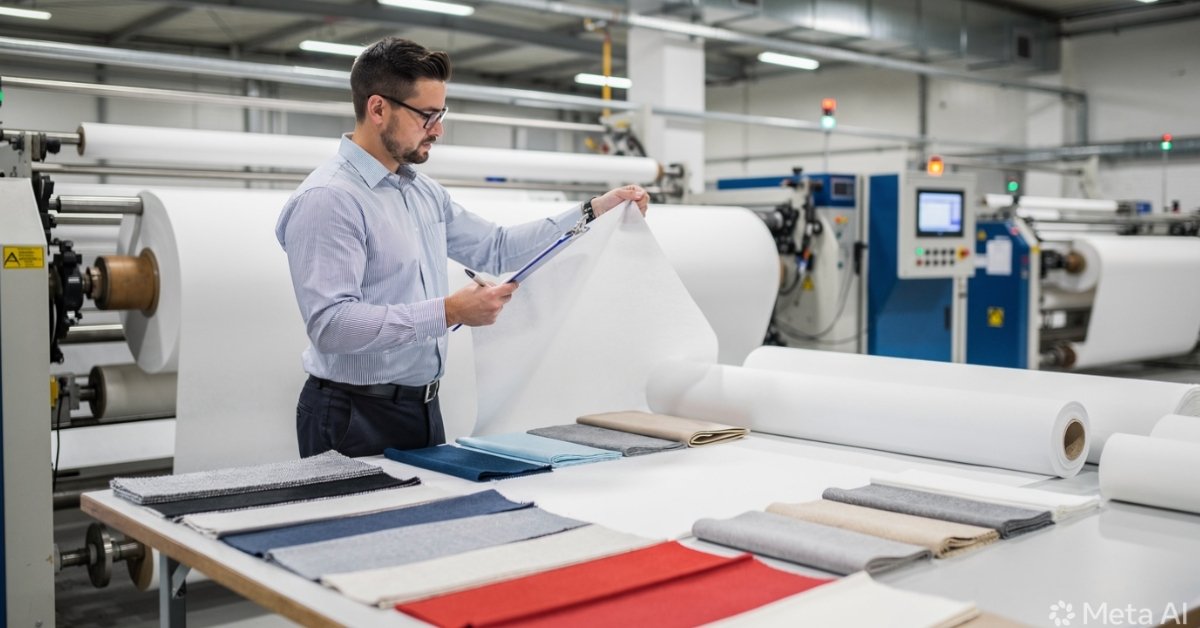
Woven fabrics are produced on a loom where two sets of yarns interlace. The warp yarns run lengthwise under tension, while the weft yarns are inserted crosswise. This interlacing creates common weave structures like Plain (1/1), Twill (diagonal), and Satin (smooth face). Each requires prior steps: fibre → spinning into yarn → warping → weaving — which makes woven production slower and more labour-intensive.
How Non-Woven Is Made — Direct Fibre-to-Fabric
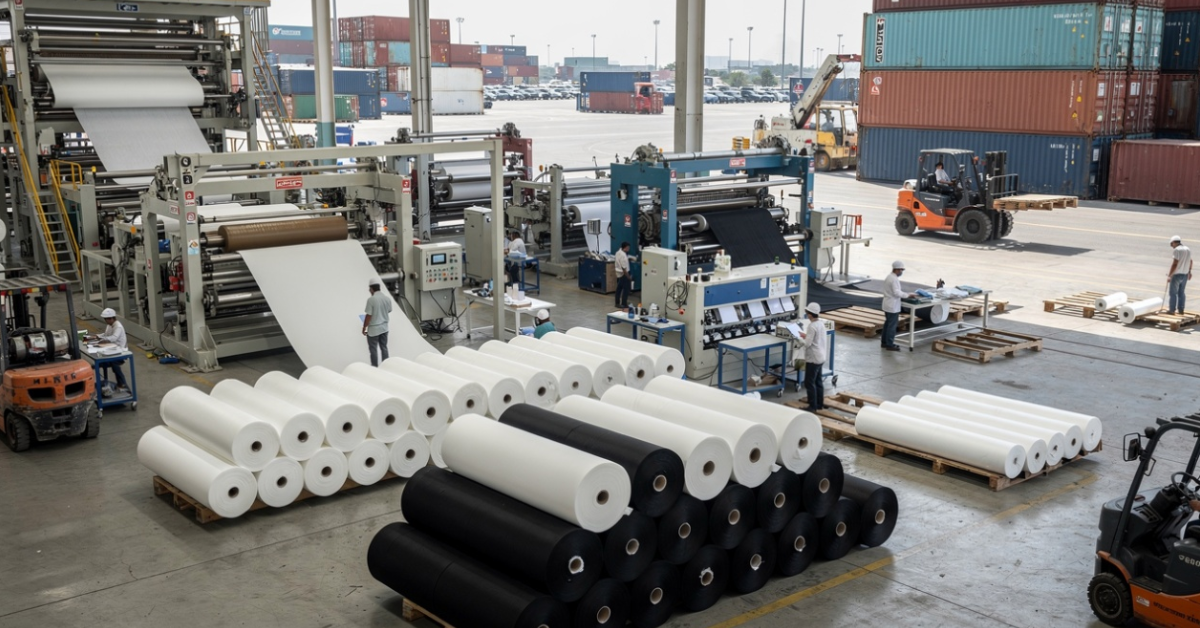
Nonwoven skips yarn entirely. Spunbond: Continuous PP filaments are extruded, laid into a web and thermally bonded. Meltblown: Microfibres (1–5 microns) are blown into a web for filtration. Spunlace (hydroentanglement): High-pressure water jets entangle fibres for softness (used for wipes). Needlepunch: Barbed needles mechanically entangle fibres for heavy geotextiles (80–800 GSM).
Woven vs Non-Woven — Full Comparison Table (15 Properties)
The table below compares woven and non-woven fabric across 15 properties, from construction and strength to cost and end-use applications:
| Property | Woven Fabric | Non-Woven Fabric |
|---|---|---|
| Construction | Warp and weft yarns interlaced on a loom | Fibres laid into a web, then bonded |
| Yarn Required | Yes — fibre must be spun into yarn first | No — fibre goes directly to fabric |
| Production Speed | Slow; multiple preparation stages | Very fast; single continuous line |
| Relative Cost | High | Low — typically 40–70% cheaper per m² |
| Tensile Strength | High, directional along warp and weft | Moderate, more isotropic |
| Fraying at Cut Edges | Yes — requires hemming | No — can be cut and used directly |
| Drape | Excellent | Stiffer, more paper-like |
| Breathability | Good, determined by weave density | Engineerable — porous to near-impermeable |
| Liquid Barrier | Requires coating/lamination | Achievable in fabric itself (SMS, SMMS) |
| Filtration | Poor without treatment | Excellent — meltblown filters to sub-micron |
| Washability | Designed for repeated laundering | Generally single-use or limited-use |
| Sterilisability | Yes, but degrades over cycles | Yes — EO and gamma compatible |
| Weight Range | Typically 80–400 GSM | Typically 10–200 GSM |
| Typical Uses | Apparel, bed linen, upholstery, canvas | Diapers, surgical gowns, masks, wipes, geotextile |
| Customisation Lead Time | Long — yarn dyeing and warping | Short — GSM, colour set on line |
Strength: Which Fabric Is Stronger?
Woven fabric is stronger, and the reason is structural rather than material. In a woven, load is carried along continuous yarns that run the full length and width of the cloth, and each yarn is locked in place by the yarns crossing it. Pull on a woven and you are pulling on the yarn itself.
In a non-woven, load is carried through bond points between filaments. Those bonds are strong, but they are discrete — pull hard enough and filaments separate at the bond points rather than breaking. This is why a 20 GSM spunbond tears easily by hand while a 20 GSM woven would not. However, non-woven strength scales with weight: a 150 GSM needlepunched geotextile routinely withstands CBR puncture loads of road construction, and a 60 GSM SMS survives high-speed garment assembly. And because non-woven has no grain direction, it does not have the weak bias axis a woven has.
Cost: Why Non-Woven Is Cheaper to Produce
Nonwoven fabric is generally 40–70% cheaper per square meter than woven fabric of comparable weight. The elimination of yarn spinning and loom weaving steps dramatically reduces labour, energy and equipment cost. For high-volume disposable applications, nonwoven PP fabric typically costs 20–50% less than equivalent woven material, which is why hygiene and medical industries shifted entirely to nonwoven.
Breathability, Drape and Handle
Woven excels in drape and hand-feel — essential for apparel and fashion. Nonwoven is more paper-like but can be engineered: breathable for crop covers (70–90% air permeability) or near-impermeable for surgical drapes. Spunlace nonwoven offers the softest drape among nonwovens, which is why it is used for premium wet wipes.
Durability and Reusability & Environmental Comparison
Woven is designed for 50+ wash cycles. Nonwoven is generally single-use by design — not because it falls apart immediately, but because barrier properties (hydrostatic head, BFE) degrade after washing. Environmentally: Woven cotton uses 7,000–10,000 L water/kg; PP spunbond uses no water in core process and is 100% recyclable (Resin Code #5), but is fossil-based and not biodegradable — requiring responsible recycling. For more, see our sustainable nonwoven fabric guide.
When to Choose Nonwoven Fabric
- Hygiene products — baby diapers, sanitary napkins, adult incontinence
- Medical and surgical — gowns, drapes, PPE, masks
- Disposable applications — where single-use is required for hygiene or cost reasons
- Agricultural covers — where breathability and UV resistance matter more than durability
- Geotextiles — where consistent pore size and filtration performance are critical
- Packaging — where lightweight, printable, and low-cost materials are preferred
When to Choose Woven Fabric
- Apparel and fashion — where drape, hand feel, and seam strength are essential
- Heavy-load industrial applications — belts, ropes, and structural reinforcement
- Reusable textiles — where washing durability over many cycles is required
- Technical textiles requiring on-grain dimensional stability under sustained stress
Application-by-Application: Which Fabric Wins
Diapers/Sanitary: Nonwoven wins. Surgical Gowns/Masks: Nonwoven (SMS/SMMS) wins for barrier. Crop Cover: Nonwoven spunbond UV wins for breathability + light transmission. Geotextile: Both — woven for high tensile, nonwoven for filtration/separation. Shopping Bags: Spunbond nonwoven wins for cost/printability vs woven canvas. Apparel Interlining: Nonwoven interlining wins for shape retention.
Can Nonwoven Replace Woven Fabric?
In many applications, nonwoven fabrics have fully replaced woven alternatives — particularly in hygiene, medical, and disposable markets. The advantages in cost, production speed, and barrier performance make nonwovens the clear choice for these applications. For apparel and heavy-duty industrial uses, woven fabrics remain the superior choice. The decision should always be driven by the specific performance requirements of your product.
What About Knitted Fabric?
A third category is knitted fabric — made by interlooping yarns (not interlacing). Knitted is stretchier than both woven and nonwoven, used for t-shirts and activewear. It is not a direct substitute for nonwoven barrier applications, but buyers often compare all three when selecting interlinings or furniture backing.
If you have decided non-woven is right for your product, the next decision is construction. Read our comparison of spunbond vs spunmelt, our guide to SMS vs SMMS, and our GSM selection guide for choosing the right weight. Olefins manufactures PP spunbond, SMS and SMMS nonwoven fabric in Karachi for buyers worldwide.
What Is the Difference Between Woven and Non-Woven Carpet?
Woven carpet is made by interlacing yarns on a loom, giving it a tight, durable pile that holds up well in high-traffic areas. Non-woven carpet — typically needle-punched from polypropylene fibres — is faster and cheaper to produce, resists fraying at cut edges, and is commonly used for exhibition flooring, automotive carpeting, and outdoor or artificial turf backing where cost and moisture resistance matter more than plush feel.
Frequently Asked QuestionsIs non-woven fabric as strong as woven fabric?
For disposable applications, nonwoven provides sufficient strength. High-performance spunbond PP offers tensile strength of 30–80 N/50mm depending on GSM — adequate for hygiene, medical, and agricultural applications. For load-bearing or apparel uses where seam strength is critical, woven fabric remains stronger.
Which is cheaper — woven or non-woven fabric?
Nonwoven fabric is generally 40–70% cheaper per m² than woven fabric of comparable weight. The elimination of yarn spinning and loom weaving steps dramatically reduces production cost. For high-volume disposable applications, nonwoven PP fabric typically costs 20–50% less than equivalent woven material.
What does non-woven fabric actually mean?
Non-woven means the fabric is made directly from fibres bonded together by heat, pressure or chemicals — not by interlacing yarns on a loom. Fibres are laid into a web (spunbond, meltblown, spunlace) and bonded, producing a flat sheet without any yarn interlacing.
Is non-woven fabric waterproof?
Standard spunbond is water-resistant but not waterproof. With SMS/SMMS construction and hydrophobic treatment, it achieves hydrostatic head >100 cm for medical gowns. For full waterproofing, microporous film + nonwoven laminate is used for Type 4/5 coveralls.
Can non-woven fabric be washed and reused?
PP spunbond shopping bags and geotextiles (80–200 GSM) can be washed and reused for months. Medical disposables like face masks, surgical gowns and diaper topsheets are designed for single-use to maintain BFE >95% and barrier performance.
What is the difference between woven and non-woven interfacing?
Woven interfacing is made on a loom and has a grain direction — strong but can shrink. Nonwoven interfacing is fibre-bonded, has no grain, is cheaper, does not fray, and is available in fusible and sew-in grades (20–80 GSM) for collars, cuffs and jacket fronts. See our full woven vs nonwoven interfacing guide.
What is the difference between woven and non-woven geotextile?
Woven geotextile is made by weaving PP tapes — high tensile strength, low elongation, used for reinforcement. Nonwoven geotextile (spunbond or needlepunched) has consistent pore size, excellent filtration and drainage, used for separation and filtration in roads and drainage trenches. See our full woven vs nonwoven geotextile guide.
Is non-woven fabric biodegradable?
Standard PP spunbond is not biodegradable — it is recyclable (Resin Code #5). Biodegradable options include PLA nonwoven (industrially compostable), cotton/hemp nonwoven, and bio-based PP grades. See our sustainable nonwoven guide for details.
Is non-woven fabric as strong as woven fabric?
For disposable applications, nonwoven provides sufficient strength. High-performance spunbond PP offers tensile strength of 30–80 N/50mm depending on GSM — adequate for hygiene, medical, and agricultural applications. For load-bearing or apparel uses where seam strength is critical, woven fabric remains stronger.
Which is cheaper — woven or non-woven fabric?
Nonwoven fabric is generally 40–70% cheaper per m² than woven fabric of comparable weight. The elimination of yarn spinning and loom weaving steps dramatically reduces production cost. For high-volume disposable applications, nonwoven PP fabric typically costs 20–50% less than equivalent woven material.
What does non-woven fabric actually mean?
Non-woven means the fabric is made directly from fibres bonded together by heat, pressure or chemicals — not by interlacing yarns on a loom. Fibres are laid into a web (spunbond, meltblown, spunlace) and bonded, producing a flat sheet without any yarn interlacing.
Is non-woven fabric waterproof?
Standard spunbond is water-resistant but not waterproof. With SMS/SMMS construction and hydrophobic treatment, it achieves hydrostatic head >100 cm for medical gowns. For full waterproofing, microporous film + nonwoven laminate is used for Type 4/5 coveralls.
Can non-woven fabric be washed and reused?
PP spunbond shopping bags and geotextiles (80–200 GSM) can be washed and reused for months. Medical disposables like face masks, surgical gowns and diaper topsheets are designed for single-use to maintain BFE >95% and barrier performance.
What is the difference between woven and non-woven interfacing?
Woven interfacing is made on a loom and has a grain direction — strong but can shrink. Nonwoven interfacing is fibre-bonded, has no grain, is cheaper, does not fray, and is available in fusible and sew-in grades (20–80 GSM) for collars, cuffs and jacket fronts. See our full woven vs nonwoven interfacing guide.
What is the difference between woven and non-woven geotextile?
Woven geotextile is made by weaving PP tapes — high tensile strength, low elongation, used for reinforcement. Nonwoven geotextile (spunbond or needlepunched) has consistent pore size, excellent filtration and drainage, used for separation and filtration in roads and drainage trenches. See our full woven vs nonwoven geotextile guide.
Is non-woven fabric biodegradable?
Standard PP spunbond is not biodegradable — it is recyclable (Resin Code #5). Biodegradable options include PLA nonwoven (industrially compostable), cotton/hemp nonwoven, and bio-based PP grades. See our sustainable nonwoven guide for details.
Olefins Private Limited manufactures premium PP spunbond and SMS nonwoven fabrics for all major industries. Contact us: info@olefins.net | WhatsApp: +92 316 2055400. We respond within 24 hours.
Previous Post
SMS vs SMMS Nonwoven Fabric — What’s the Difference?
Post a comment
Related Posts
How to Choose & Source Nonwoven Fabric Manufacturers in Pakistan: Complete Buyer’s Guide
Sourcing high-quality polypropylene (PP) spunbond and composite nonwoven fabrics from Pakistan requires a strategic approach…
Nonwoven Fabric vs Plastic: Why PP Spunbond is the Smarter Choice
Manufacturers and procurement teams frequently face a choice between polypropylene nonwoven fabric and conventional plastic…
Nonwoven Fabric in Pakistan — Industry Overview & Export Capabilities 2026
Pakistan’s textile industry is one of the largest in the world, contributing over 60% of…
How to Choose a Nonwoven Fabric Manufacturer — 10 Questions to Ask Before Buying
Choosing the wrong nonwoven fabric manufacturer can cost you far more than the difference in…