



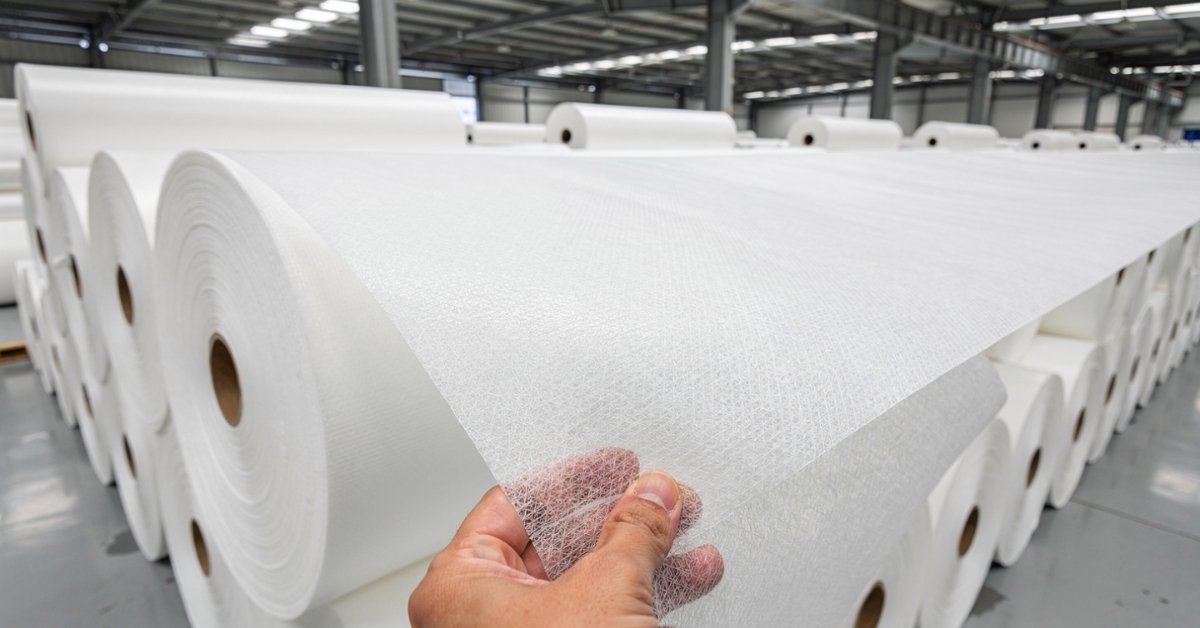
If you work in hygiene manufacturing, medical garments, agricultural production, or industrial packaging, chances are you have come across the term spunbond nonwoven fabric. But what exactly is it, how is it made, and why is it the most widely used nonwoven material in the world today?
In this comprehensive guide, we break down everything you need to know about spunbond nonwoven fabric — from the manufacturing process and technical specifications to its key applications across industries. Whether you are sourcing fabric for the first time or looking to optimize your supply chain, this guide will help you make informed decisions. If you are comparing fabric types, learn how spunbond differs from woven fabric in terms of construction, strength and cost. For treatment options, see hydrophilic vs hydrophobic nonwoven and spunbond vs spunmelt.
What Is Spunbond Nonwoven Fabric?
Spunbond nonwoven fabric is a type of engineered textile manufactured directly from thermoplastic polymer fibres — most commonly polypropylene (PP) — without the need for weaving or knitting. The fibres are extruded, stretched, and thermally bonded into a flat sheet structure that resembles a fabric but is produced in a single continuous process.
Unlike woven or knitted fabrics, spunbond nonwovens have no discernible pattern of interlaced yarns. Instead, they are composed of randomly or directionally laid continuous filaments that are bonded together through heat and pressure. This gives spunbond fabric its characteristic combination of strength, softness, and uniformity. For a detailed comparison, see how spunbond differs from woven fabric across 15 key properties.
How Is Spunbond Nonwoven Fabric Made?
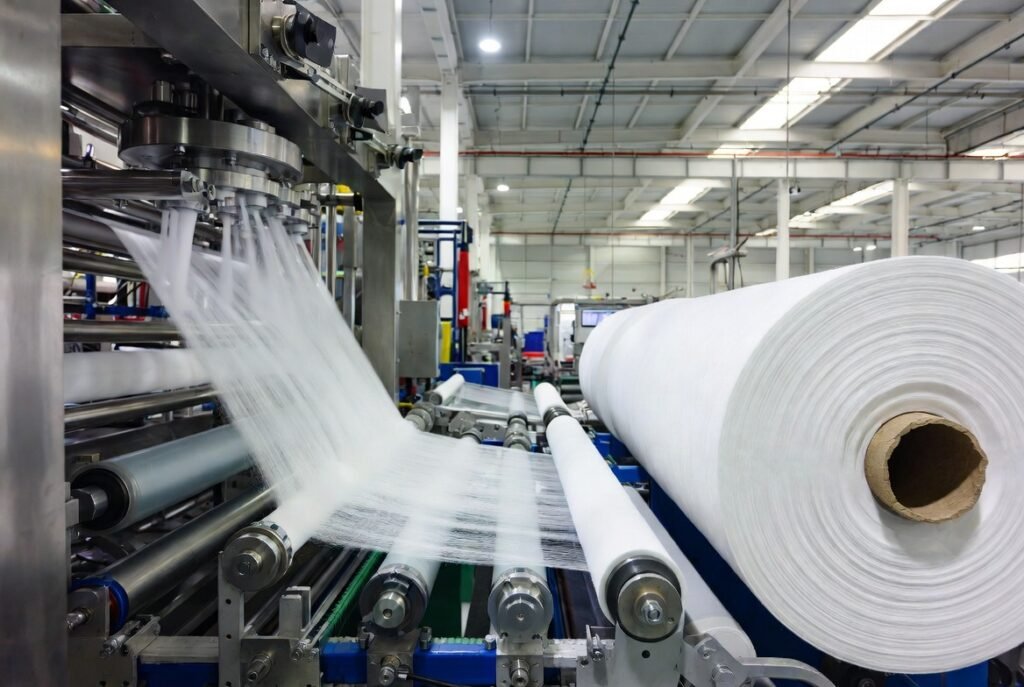
The spunbond manufacturing process consists of the following key stages:
Polymer Extrusion
Raw polypropylene granules are fed into an extruder where they are melted at high temperature (typically 220–260°C) and forced through a spinneret — a metal plate with thousands of tiny holes.
Fiber Drawing
The molten polymer exits the spinneret as continuous filaments. High-velocity air jets stretch these filaments to achieve the desired fibre diameter (typically 15–35 microns).
Web Formation
The drawn filaments are deposited onto a moving conveyor belt in a controlled pattern — either randomly laid (isotropic) or directionally laid (anisotropic) — forming a continuous web.
Thermal Bonding
The web passes through heated calender rollers with an engraved pattern. Heat and pressure fuse the fibre crossover points, creating the bonded fabric structure.
Winding
The finished fabric is wound into large rolls, inspected for quality, slit to required widths, and packaged for shipment. For GSM tolerances and roll length formula, see width and roll length guide and what is GSM.
Key Properties of Spunbond Nonwoven Fabric
Spunbond fabric’s popularity across so many industries comes from its unique combination of properties:
- Tensile strength. Continuous-filament construction gives spunbond high strength relative to weight — typically 25–60 N in the machine direction at 20 GSM, tested to ISO 9073-3.
- Isotropy. Because filaments are randomly laid, spunbond has no grain direction in the way woven fabric does. MD:CD strength ratio is usually between 1.5:1 and 2.5:1 depending on line configuration.
- Breathability. The open filament structure gives high air permeability while still trapping particulates — the reason it is used for both crop covers and mask outer layers — see face mask meltblown.
- Chemical inertness. Polypropylene resists most acids, alkalis and alcohols, does not support mould growth, and is inherently hypoallergenic — hence its use in skin-contact hygiene products — see nonwovens for hygiene.
- Low linting. Thermal calender bonding fuses filaments without adhesives or binders, so spunbond sheds very few loose fibres. Critical in cleanroom and surgical applications.
- Thermal bondability. PP spunbond can be ultrasonically welded and heat-sealed, which is what makes high-speed diaper and bag converting possible without stitching or glue.
- Hydrophobicity by default. Untreated PP repels water. Hydrophilic behaviour is achieved by a surface finish applied at the finishing stage, and is specified per roll — see hydrophilic vs hydrophobic nonwoven for treatment guide.
- UV vulnerability without stabiliser. Untreated PP degrades under sustained sunlight. Agricultural and geotextile grades require a UV stabiliser package, specified by expected field life — see geotextile nonwoven.
Spunbond Nonwoven Fabric GSM Guide
GSM (grams per square meter) is the most critical specification for spunbond fabric buyers. The right GSM depends entirely on your application:
| GSM Range | Weight Category | Typical Applications |
|---|---|---|
| 10 – 20 GSM | Ultra-lightweight | Hygiene topsheet, wet wipes substrate, face mask layer — see wet wipes nonwoven |
| 20 – 40 GSM | Lightweight | Baby diaper components, sanitary napkin backsheet, medical caps — see hygiene |
| 40 – 60 GSM | Medium weight | Surgical gown backing, agricultural crop cover, reusable shopping bags — see shopping bags |
| 60 – 100 GSM | Heavy weight | Geotextiles, furniture backing, industrial protective clothing — see furniture nonwoven |
| 100+ GSM | Extra heavy | Construction barriers, heavy-duty bags, carpet backing — see geotextile |
Top Applications of Spunbond Nonwoven Fabric
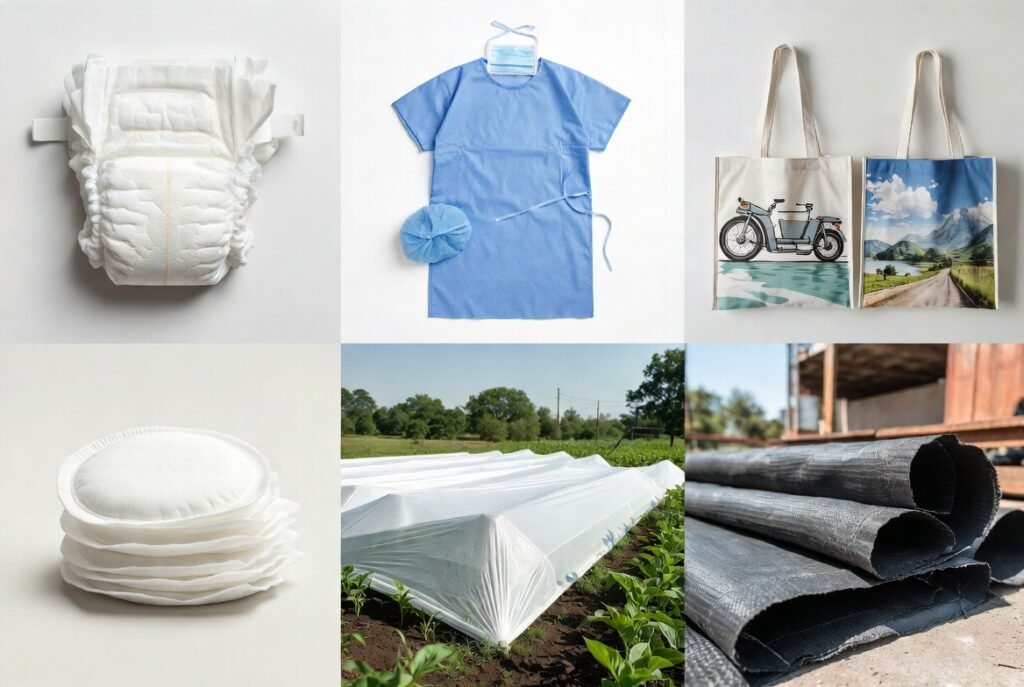
1- Hygiene Products
Spunbond fabric is a core component in the global hygiene industry. Baby diaper manufacturers use it for topsheets (the layer touching baby’s skin), backsheets, leg cuffs, and acquisition distribution layers. The ability to produce ultra-lightweight fabrics (10–18 GSM) with excellent softness and controlled hydrophilicity makes spunbond PP the material of choice for premium hygiene brands. See hydrophilic vs hydrophobic nonwoven for topsheet vs backsheet selection.
2- Medical & Healthcare
In healthcare, spunbond fabric forms the outer and inner layers of surgical gowns, drapes, caps, and shoe covers. When combined with a meltblown middle layer (forming SMS fabric), it provides both the softness needed for patient comfort and the barrier performance required in clinical environments. For SMS vs SMMS, see SMS vs SMMS nonwoven fabric.
3- Agricultural Applications
Agricultural nonwoven covers made from UV-stabilized spunbond PP protect crops from frost, insects, and excessive sunlight while still allowing water and air to reach the plants. These covers extend growing seasons, reduce pesticide use, and are widely used in vegetable farming across Asia, Europe, and the Americas.
4- Shopping Bags & Packaging
Reusable spunbond polypropylene bags have replaced billions of single-use plastic bags globally. At 80–120 GSM, spunbond PP provides the strength and durability needed for retail bags while remaining lightweight and foldable. They are printable in any color or design — see nonwoven fabric for shopping bags.
5- Geotextiles & Construction
Heavy-weight spunbond nonwovens (80–200 GSM) are used in road construction, drainage systems, and slope stabilization as geotextile fabrics. They separate soil layers, prevent erosion, and distribute loads — a critical but often overlooked application of nonwoven technology.
Spunbond vs Meltblown vs Needlepunch — Construction Comparison
Choosing between spunbond, meltblown and needlepunch depends on strength vs filtration vs cost. The right choice depends entirely on your application:
| Property | Spunbond | Meltblown | Needlepunch |
|---|---|---|---|
| Strength | Very High — see spunbond fabric | Low | High |
| Softness | High | Very Low | Medium |
| Filtration | Low | Very High — see face mask meltblown | Medium |
| Cost | Low — see nonwoven fabric price | High | Medium |
| Best For | Hygiene, bags, agri — see sustainable nonwoven fabric | Masks, filters | Carpets, padding |
How to Source Quality Spunbond Nonwoven Fabric
When evaluating a spunbond nonwoven fabric supplier, here are the key factors to assess:
- GSM accuracy — request test reports showing actual vs. declared GSM across roll width — see TDS per product
- Tensile strength — ask for ASTM D5034 test data for MD and CD directions
- Fiber uniformity — examine rolls visually and request formation test photos
- Color consistency — critical for branded products; request color swatches
- MOQ and lead time — understand minimum order quantities and production schedules — see sourcing guide
- Export capability — verify the supplier can manage documentation for your country — FOB Karachi and CFR GCC
Frequently Asked Questions — About Spunbond Nonwoven Fabric
Is spunbond nonwoven fabric waterproof?
Standard spunbond PP fabric is not inherently waterproof, but it can be treated with a hydrophobic finish to repel water. For full waterproofing, a laminated or coated version is recommended. SMS spunmelt fabric offers better barrier performance than plain spunbond.
What is the difference between spunbond and meltblown fabric?
Spunbond fabric uses continuous filaments for strength and structure. Meltblown uses micro-fibres for filtration efficiency. SMS fabric combines both — a spunbond outer, meltblown middle, and spunbond inner — for the best of both properties.
Can spunbond fabric be recycled?
Yes. Polypropylene spunbond fabric is recyclable. The PP polymer can be collected, melted, and re-pelletized for use in other PP products. Many manufacturers now offer take-back schemes for post-industrial nonwoven waste.
What is the standard roll length for spunbond fabric?
Roll lengths vary by supplier and GSM. Common roll lengths are 1,000–3,000 linear meters. Heavier GSM fabrics have shorter rolls per unit weight. Custom roll lengths are available on request.
Is spunbond nonwoven fabric waterproof?
Standard spunbond PP fabric is not inherently waterproof, but it can be treated with a hydrophobic finish to repel water. For full waterproofing, a laminated or coated version is recommended. SMS spunmelt fabric offers better barrier performance than plain spunbond.
What is the difference between spunbond and meltblown fabric?
Spunbond fabric uses continuous filaments for strength and structure. Meltblown uses micro-fibres for filtration efficiency. SMS fabric combines both — a spunbond outer, meltblown middle, and spunbond inner — for the best of both properties.
Can spunbond fabric be recycled?
Yes. Polypropylene spunbond fabric is recyclable. The PP polymer can be collected, melted, and re-pelletized for use in other PP products. Many manufacturers now offer take-back schemes for post-industrial nonwoven waste.
What is the standard roll length for spunbond fabric?
Roll lengths vary by supplier and GSM. Common roll lengths are 1,000–3,000 linear meters. Heavier GSM fabrics have shorter rolls per unit weight. Custom roll lengths are available on request.
Looking for a reliable spunbond nonwoven fabric manufacturer? Olefins Private Limited supplies high-quality PP spunbond fabric in custom GSM, widths, and colors from Pakistan. For related guides, see hydrophilic vs hydrophobic nonwoven, wet wipes nonwoven fabric, and polypropylene nonwoven fabric.
Contact us at info@olefins.net or WhatsApp +92 316 2055400 for a free sample and quotation. See product portfolio and request sample.
Post a comment
Related Posts
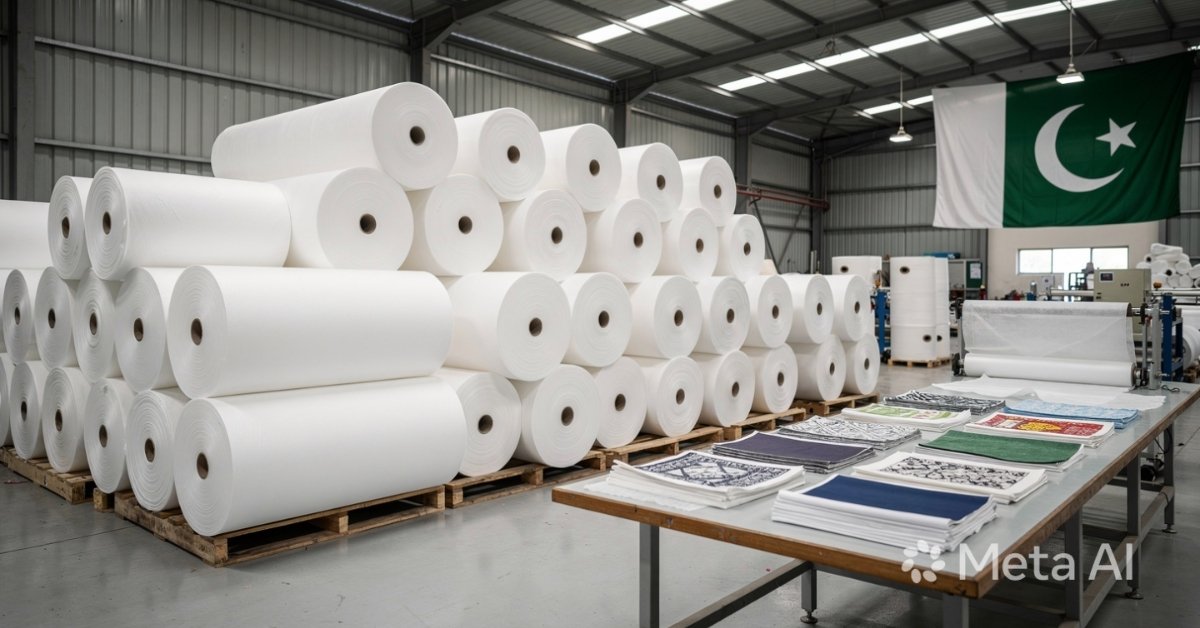
How to Source Best Nonwoven Fabric Supplier In Pakistan: A Buyer’s Complete Guide
Pakistan has emerged as one of the world’s most competitive sources for non-woven fabric —…