



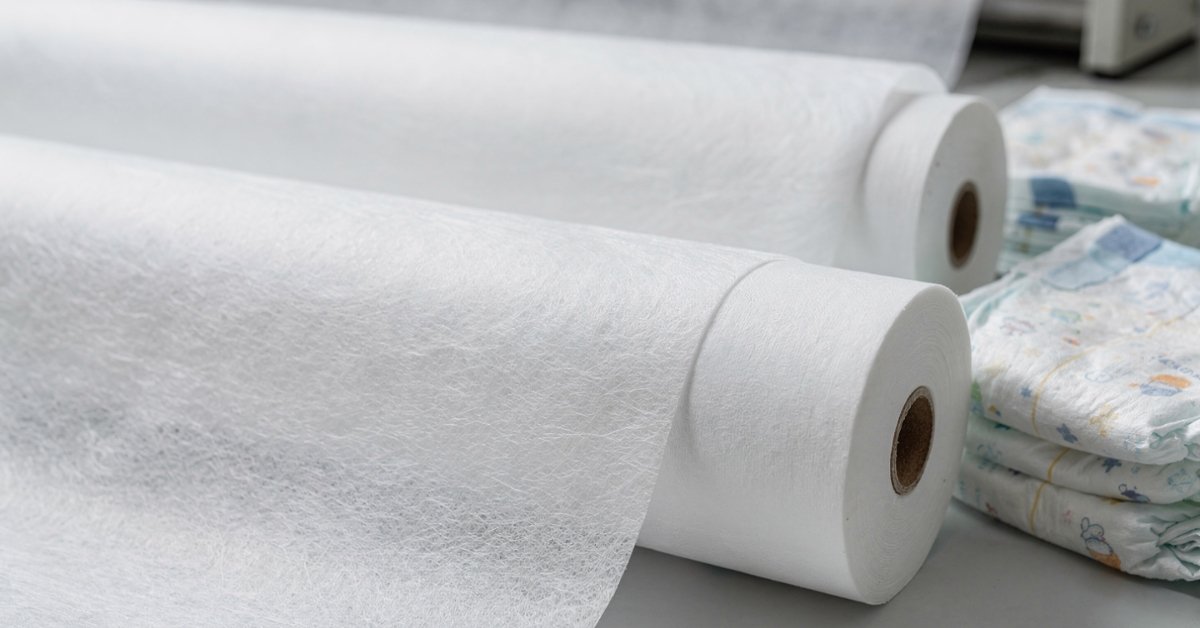
The modern baby diaper is a marvel of materials engineering — and at the heart of its performance is non-woven fabric. From the soft topsheet that touches a baby’s skin to the outer backsheet that keeps moisture contained, hygiene nonwoven fabric forms the structural foundation of every diaper produced today.
For diaper manufacturers and procurement teams sourcing nonwoven fabric components, understanding the specifications, performance requirements, and supplier criteria for each layer is essential. This guide covers everything you need to know.
For a complete overview of all hygiene-grade nonwoven fabrics we offer, see: Hygiene Nonwoven Fabric — Full Product Range
The Anatomy of a Baby Diaper — Nonwoven Components
A standard baby diaper contains multiple layers, each with a distinct function — and most are made from spunbond fabric components:
| Component | Fabric Type | Typical GSM | Key Property |
|---|---|---|---|
| Topsheet | Hydrophilic spunbond | 10–18 GSM | Soft, skin-safe, quick liquid pass-through |
| ADL / Acquisition layer | Through-air bonded / ADL | 30–60 GSM | Rapid fluid acquisition and distribution |
| Backsheet nonwoven | Hydrophobic spunbond | 15–22 GSM | Soft feel outside, liquid barrier + printability |
| Leg cuffs | Spunbond or SMS | 15–25 GSM | Elastic containment barrier |
| Waistband / ears | Spunbond laminate | 20–35 GSM | Stretch, comfort, and fit |
For complete GSM specifications across all hygiene and medical applications, see GSM Nonwoven Fabric Guide.
Baby Diaper Topsheet Fabric — The Most Critical Component for Softness and Dryness
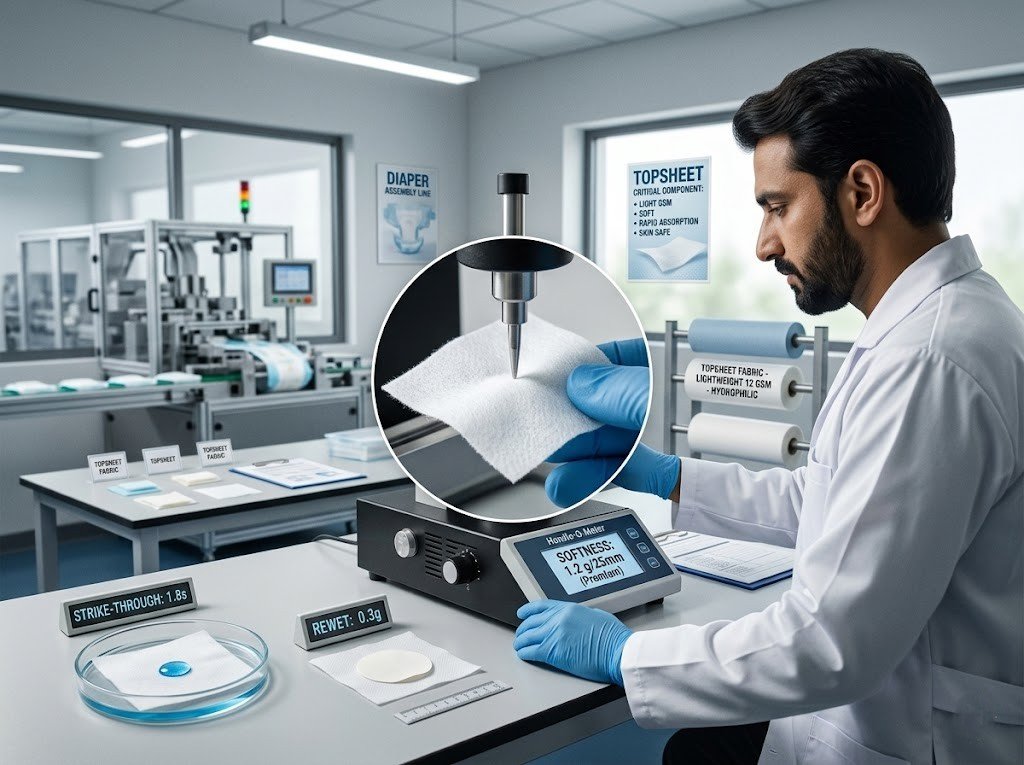
The topsheet is the layer that makes direct contact with a baby’s skin — making it the most performance-sensitive nonwoven component in diaper manufacturing. Key specifications that topsheet fabric must meet:
- GSM: 10–18 GSM — lightweight enough to be imperceptible against skin
- Hydrophilic treatment: fabric must transfer liquid rapidly (strike-through time < 2 seconds)
- Rewet performance: absorbed liquid must not return to the surface (< 0.5 g rewet)
- Softness: measured by Handle-O-Meter (< 1.5 g/25mm for premium grade)
- Skin Safety: all additives must comply with REACH, OEKO-TEX Standard 100 and be free of harmful substances
- Fiber Diameter: finer fibres (< 20 microns) produce softer, more skin-friendly topsheets
For topsheet requirements in feminine hygiene and adult care, see Sanitary Napkin Topsheet Fabric Guide and Adult Incontinence Topsheet Fabric Guide.
ADL & Acquisition Layer — Fluid Distribution
Between the topsheet and the absorbent core sits the ADL (Acquisition Distribution Layer). Typically a 30–60 GSM through-air bonded or high-loft ADL, its job is to quickly acquire fluid and spread it laterally before it reaches the SAP core. Without a proper ADL, fluid pools in one spot and causes leakage. Key spec: acquisition time < 3 seconds, rewet < 1g.
Backsheet Fabric — The Outer Layer
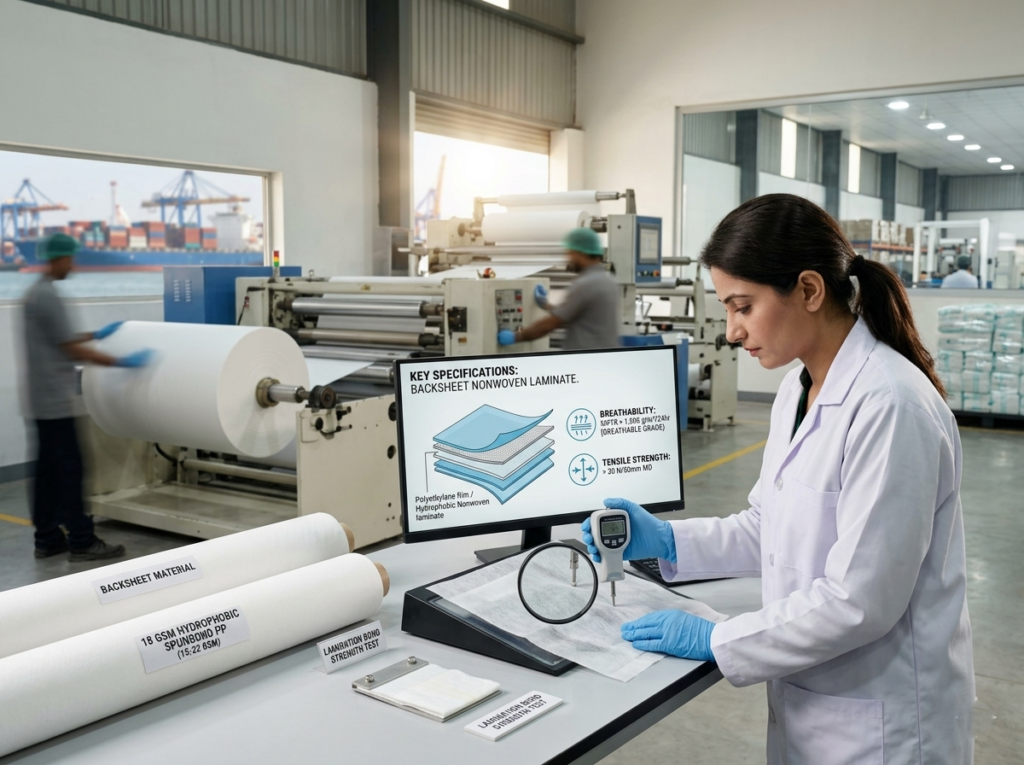
The backsheet combines a thin polyethylene film with a nonwoven fabric laminate to create an outer layer that is both liquid-proof and cloth-like in feel. The nonwoven component is typically a 15–22 GSM hydrophobic spunbond PP fabric that provides softness, printability, and breathability. For a detailed breakdown of fabric constructions, see our spunbond vs spunmelt technical comparison.
Key backsheet nonwoven specifications: breathability (MVTR > 1,500 g/m²/24hr for breathable grades), tensile strength (> 30 N/50mm MD), and lamination bond strength.
Leg Cuffs & Waistband — Containment and Fit
Leg cuffs (15–25 GSM spunbond or SMS with hydrophobic treatment) create elastic standing gathers that prevent side leakage. Waistband ears (20–35 GSM spunbond laminate) provide stretch and comfort. Both require high elongation (> 80%) and elastic recovery, plus consistent hydrophobicity to avoid strike-through at the edges.
Sourcing Nonwoven Fabric for Diaper Manufacturing — What to Look For
- Consistent GSM: ask for tolerance data across full roll width — target ±3% — see our GSM Guide
- Roll-to-roll consistency: critical for automated diaper production lines
- Hydrophilic durability: treatment must survive multiple wetting cycles (> 5 insults)
- Certifications: OEKO-TEX Standard 100 or equivalent for skin-contact layers
- Supplier reliability: production capacity, lead times, and quality documentation — see How to Choose Manufacturer
- Customization: ability to produce custom finishes, embossing patterns, and colors
Frequently Asked QuestionsWhat is the best GSM for baby diaper topsheet nonwoven?
10–15 GSM is the standard range for premium diaper topsheets. Ultra-premium products use 10–12 GSM. Economy grades typically use 15–18 GSM. Lighter GSM with consistent quality is generally preferable as it reduces material cost while maintaining performance. See our GSM guide for selection.
Can I get hydrophilic spunbond fabric in custom colors?
Yes — hydrophilic topsheet fabric can be produced in custom colors using masterbatch pigments. However, the hydrophilic treatment must be verified not to affect color uniformity. White is the standard; custom colors are used for branded or premium product lines.
What is ADL and what GSM is used for diaper ADL?
ADL stands for Acquisition Distribution Layer. It sits under the topsheet and spreads fluid laterally to the core. Typical ADL is 30–60 GSM through-air bonded or high-loft nonwoven with fast acquisition (<3 sec) and low rewet.
Is diaper nonwoven fabric skin-safe and certified?
Yes. Diaper topsheet and backsheet must be OEKO-TEX Standard 100 Class 1 certified for baby skin contact, REACH compliant, and free of harmful substances. Olefins provides OEKO-TEX certified hydrophilic and hydrophobic spunbond for hygiene applications.
What is the best GSM for baby diaper topsheet nonwoven?
10–15 GSM is the standard range for premium diaper topsheets. Ultra-premium products use 10–12 GSM. Economy grades typically use 15–18 GSM. Lighter GSM with consistent quality is generally preferable as it reduces material cost while maintaining performance. See our GSM guide for selection.
Can I get hydrophilic spunbond fabric in custom colors?
Yes — hydrophilic topsheet fabric can be produced in custom colors using masterbatch pigments. However, the hydrophilic treatment must be verified not to affect color uniformity. White is the standard; custom colors are used for branded or premium product lines.
What is ADL and what GSM is used for diaper ADL?
ADL stands for Acquisition Distribution Layer. It sits under the topsheet and spreads fluid laterally to the core. Typical ADL is 30–60 GSM through-air bonded or high-loft nonwoven with fast acquisition (<3 sec) and low rewet.
Is diaper nonwoven fabric skin-safe and certified?
Yes. Diaper topsheet and backsheet must be OEKO-TEX Standard 100 Class 1 certified for baby skin contact, REACH compliant, and free of harmful substances. Olefins provides OEKO-TEX certified hydrophilic and hydrophobic spunbond for hygiene applications.
Olefins Private Limited manufactures hydrophilic spunbond and SMS nonwoven fabrics for diaper and hygiene applications. Available in 10–35 GSM, custom widths, and softness grades. Request a sample or bulk quotation — contact us at info@olefins.net or WhatsApp +92 316 2055400.
Post a comment
Related Posts
Wet Wipes Nonwoven Fabric Substrate Guide — Spunlace, Spunbond & Blends
Introduction Wet wipes are one of the most substrate-sensitive products in the hygiene and personal…
Adult Incontinence Nonwoven Fabric — Supply Guide for Briefs, Pads & Underpads
Introduction The global adult incontinence market is one of the fastest-growing segments in the hygiene…
Sanitary Napkin Nonwoven Fabric — Topsheet & Coverstock Guide
Introduction Every sanitary napkin or panty liner placed on a retail shelf contains at least…