



Introduction
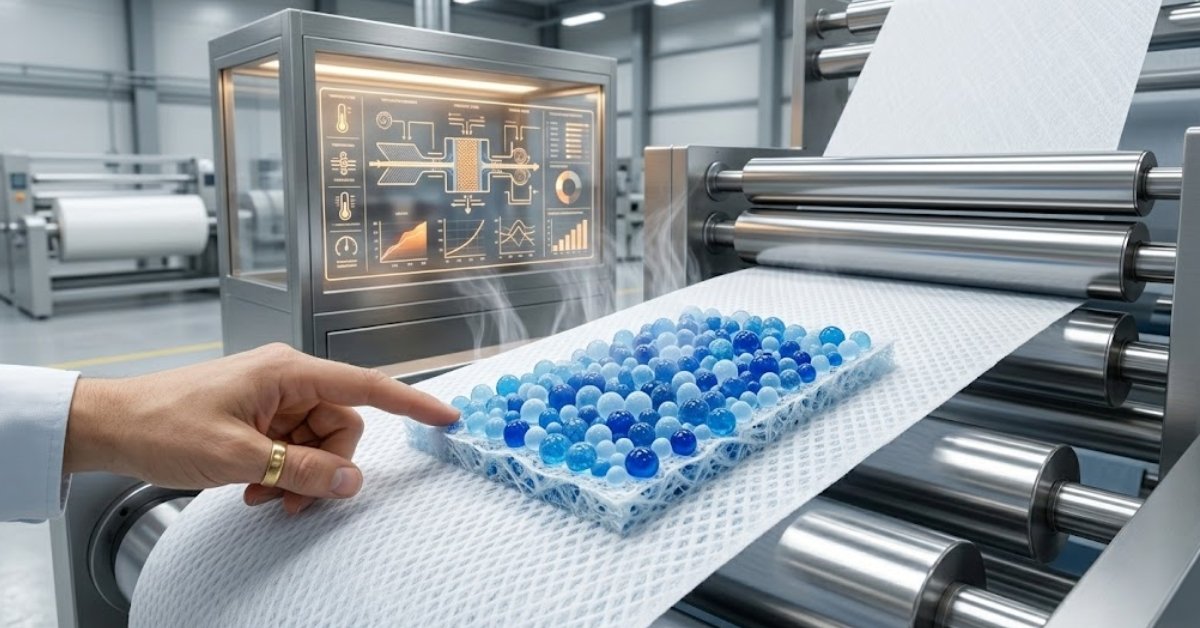
Every sanitary napkin or panty liner placed on a retail shelf contains at least two distinct nonwoven fabric layers. The topsheet — the layer that sits directly against the skin — must be soft, hydrophilic, and capable of rapid fluid transfer. The backsheet or coverstock must be hydrophobic, acting as a leakage barrier. Getting both layers right from a reliable supplier is the single most important raw material decision a feminine hygiene manufacturer makes.
This guide covers the exact nonwoven fabric specifications used in sanitary napkin topsheets and coverstock, the fabric types available, how to evaluate a supplier, and why manufacturers across the UAE, Bangladesh and Saudi Arabia are increasingly sourcing sanitary napkin nonwoven fabric from Pakistan.
For a complete overview of all hygiene-grade nonwoven fabrics we offer, see: Hygiene Nonwoven Fabric — Full Product Range
What Nonwoven Fabrics Are Used in a Sanitary Napkin?
A standard sanitary napkin has three to five layers, each with a distinct material requirement:
| Layer | Function | Fabric type | Typical GSM |
|---|---|---|---|
| Topsheet (coverstock) | Skin contact — soft, quick fluid passage | Hydrophilic spunbond PP or hot-air through | 12 – 20 GSM |
| ADL (Acquisition Distribution Layer) | Rapid fluid distribution across core | Hydrophilic spunbond or bicomponent | 20 – 35 GSM |
| Absorbent core | Fluid retention — fluff pulp + SAP | Tissue wrapped core (non-nonwoven) | — |
| Backsheet | Leakage barrier | Hydrophobic spunbond PP | 18 – 25 GSM |
| Wings coverstock (if applicable) | Comfort, adhesion | Soft hydrophilic spunbond | 15 – 20 GSM |
Sanitary Napkin Topsheet Fabric — Fluid Acquisition and Rewet Control Layer
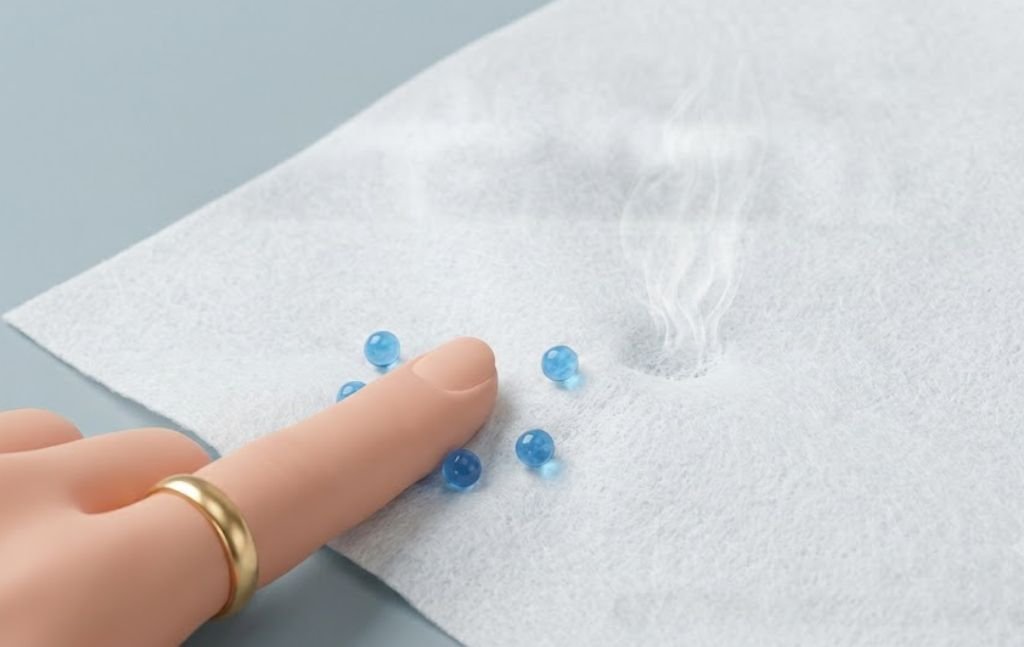
The topsheet of a sanitary napkin is the most performance-critical nonwoven layer. It must satisfy three competing demands simultaneously: it must feel soft against sensitive skin, allow fluid to pass through rapidly, and resist wet-back so the wearer feels dry between uses.
Compare topsheet specs for Baby Diaper Topsheet Fabric Guide.
Hydrophilic Spunbond PP — The Industry Standard
Polypropylene spunbond nonwoven fabric treated with a hydrophilic finish is the dominant topsheet material for mid-range and mass-market sanitary napkins globally. Produced on continuous SSS (triple-beam) spunbond lines, it offers uniform GSM distribution, consistent pore size, and excellent tensile strength for high-speed automated napkin assembly lines.
Key performance parameters buyers should specify:
- GSM: 12–18 GSM for standard napkins; 15–20 GSM for overnight/heavy flow
- Width: typically 35–200 mm for cut-and-place or 800–2,400 mm for jumbo rolls
- Hydrophilic treatment: wetting time under 3 seconds per EDANA WSP 70.3
- Wet-back: less than 0.5 g rewet under standard test conditions
- Tensile strength: minimum 40 N/5cm in machine direction
For adult care products that require the same topsheet softness with higher fluid capacity,
see: Adult Incontinence Nonwoven Fabric — Supply Guide for Briefs, Pads & Underpads
Hot-Air Through (HAT) Nonwoven — Premium Segment
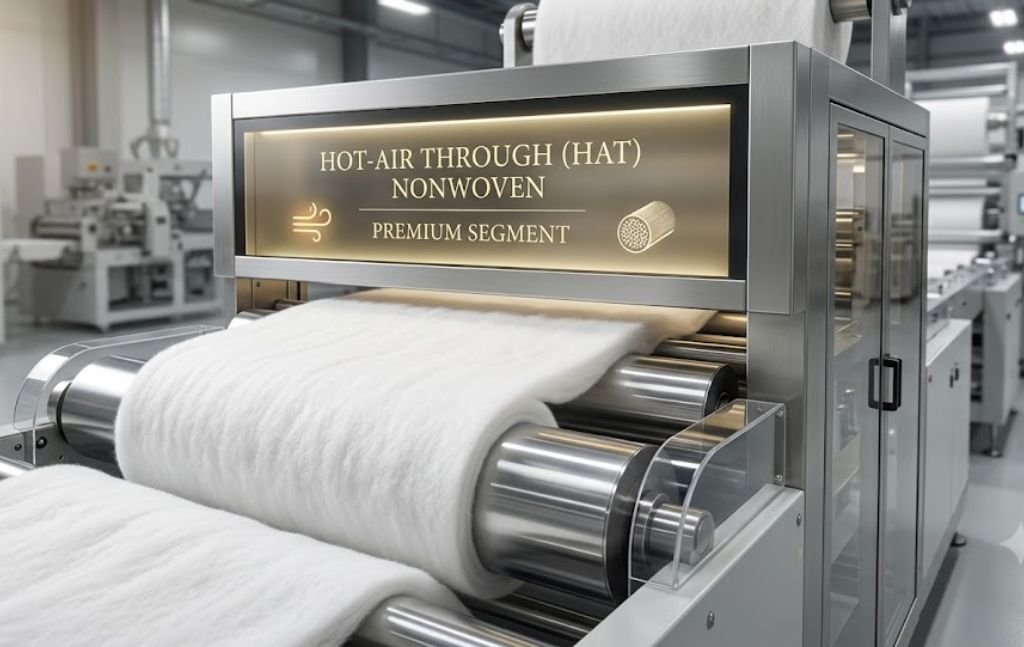
For premium and ultra-thin sanitary napkins targeting the upper market tier, hot-air through bonded nonwoven fabric — made from bicomponent ES (polyethylene-polypropylene core-sheath) fiber — delivers a significantly softer, more three-dimensional surface texture. The lofted structure creates micro-air channels that maintain surface dryness through the capillary transfer of fluid into the absorbent core.
Hot-air through topsheet fabric is used by leading feminine hygiene brands in their premium SKUs. GSM range: 20–35 GSM. It is more expensive than standard hydrophilic spunbond, but delivers a premium in-use experience that justifies higher retail pricing.
Coverstock & Backsheet Fabric Specifications
The backsheet (underside) of a sanitary napkin requires a hydrophobic nonwoven fabric to prevent any leakage transferring to underwear. Manufacturers typically use a standard hydrophobic spunbond PP in the 18–25 GSM range, optionally combined with a PE breathable film for full barrier protection in overnight pads.
Wing coverstock — used in pads with wing construction — must be soft, flexible, and compatible with hot-melt adhesive systems used on automated napkin assembly lines. This requires a tight spunbond construction in the 15–20 GSM range with consistent caliper (thickness) for adhesive application reliability.
Sanitary Napkin Nonwoven Fabric — Specification Reference
| Parameter | Standard topsheet | Premium HAT topsheet | Backsheet |
|---|---|---|---|
| Material | 100% PP spunbond | ES bicomponent HAT | 100% PP spunbond |
| GSM range | 12 – 18 GSM | 20 – 35 GSM | 18 – 25 GSM |
| Treatment | Hydrophilic | Hydrophilic (inherent) | Hydrophobic |
| Wetting time | < 3 seconds | < 2.5 seconds | N/A (barrier) |
| Wet-back | < 0.5 g | < 0.3 g | N/A |
| Tensile (MD) | > 40 N/5cm | > 30 N/5cm | > 45 N/5cm |
| Typical width | 35–2,400 mm | 35–2,400 mm | 100–2,400 mm |
| Available from Olefins | Yes — custom GSM | On enquiry | Yes — custom GSM |
To learn how GSM impacts acquisition speed and rewet performance,
see: GSM Nonwoven Fabric Guide.
What to Look for in a Sanitary Napkin Nonwoven Fabric Supplier
Feminine hygiene manufacturers sourcing nonwoven topsheet fabric should evaluate suppliers against five criteria:
- GSM consistency: roll-to-roll variation must be within ±3% to ensure uniform performance on automated assembly lines. Request roll-level test data, not just batch averages.
- Width tolerance: slit-to-width accuracy within ±1 mm is critical for cut-and-place assembly. Ask for width tolerance certificates.
- Hydrophilic treatment durability: treatment must remain effective through the shelf life of the finished napkin (typically 3–5 years). Accelerated ageing test results should be available.
- Contamination-free supply: topsheet fabric is in direct skin contact. Supplier clean-room storage, sealed PE-film roll packaging, and batch traceability documentation are non-negotiable.
- MOQ flexibility: early-stage manufacturers need smaller trial runs before committing to container volumes. Shortlist suppliers who offer sample rolls and pilot runs before full production quantities.
Why Source Sanitary Napkin Nonwoven Fabric from Pakistan?
Pakistan-based nonwoven manufacturers — including Olefins Private Limited in Karachi — offer a compelling value proposition for feminine hygiene manufacturers in the GCC, Bangladesh, Africa and Southeast Asia:
- 30–40% cost advantage versus equivalent Chinese or European supply, driven by lower PP raw material costs and competitive labour.
- Karachi port proximity: 7-day sea freight to UAE/GCC; 10–12 days to Bangladesh and East Africa — significantly shorter than China-to-GCC routes.
- Custom GSM and width: OEM production against buyer-provided specifications, with minimum quantities from 1 metric tonne.
- No China tariff exposure: for buyers in markets with trade policy risk on Chinese imports, Pakistani supply offers a geographically diversified sourcing alternative.
Frequently Asked Questions — Sanitary Napkin Nonwoven FabricWhat GSM is used for sanitary napkin topsheets?
Standard sanitary napkin topsheets use 12–18 GSM hydrophilic spunbond PP nonwoven. Premium and overnight napkins may use 20–35 GSM hot-air through (HAT) bicomponent fabric for superior softness and dryness.
What is the difference between topsheet and coverstock?
Topsheet and coverstock are used interchangeably to describe the skin-facing layer of a sanitary pad. The topsheet must be hydrophilic (allowing fluid to pass through quickly) and soft against the skin. The backsheet is the opposing layer — it is hydrophobic and prevents fluid leakage.
Can I order custom-width and custom-GSM sanitary napkin fabric?
Yes. Olefins Private Limited supplies sanitary napkin nonwoven fabric in custom GSM (10–80 GSM), custom slit widths, and custom colours. Provide your specification sheet and we will supply a matched sample roll for line trials prior to bulk orders.
What GSM is used for sanitary napkin topsheets?
Standard sanitary napkin topsheets use 12–18 GSM hydrophilic spunbond PP nonwoven. Premium and overnight napkins may use 20–35 GSM hot-air through (HAT) bicomponent fabric for superior softness and dryness.
What is the difference between topsheet and coverstock?
Topsheet and coverstock are used interchangeably to describe the skin-facing layer of a sanitary pad. The topsheet must be hydrophilic (allowing fluid to pass through quickly) and soft against the skin. The backsheet is the opposing layer — it is hydrophobic and prevents fluid leakage.
Can I order custom-width and custom-GSM sanitary napkin fabric?
Yes. Olefins Private Limited supplies sanitary napkin nonwoven fabric in custom GSM (10–80 GSM), custom slit widths, and custom colours. Provide your specification sheet and we will supply a matched sample roll for line trials prior to bulk orders.
Request a Free Sanitary Napkin Nonwoven Fabric Sample — Olefins Pakistan
info@olefins.net | WhatsApp +92 316 2055400.
Post a comment
Related Posts
Wet Wipes Nonwoven Fabric Substrate Guide — Spunlace, Spunbond & Blends
Introduction Wet wipes are one of the most substrate-sensitive products in the hygiene and personal…
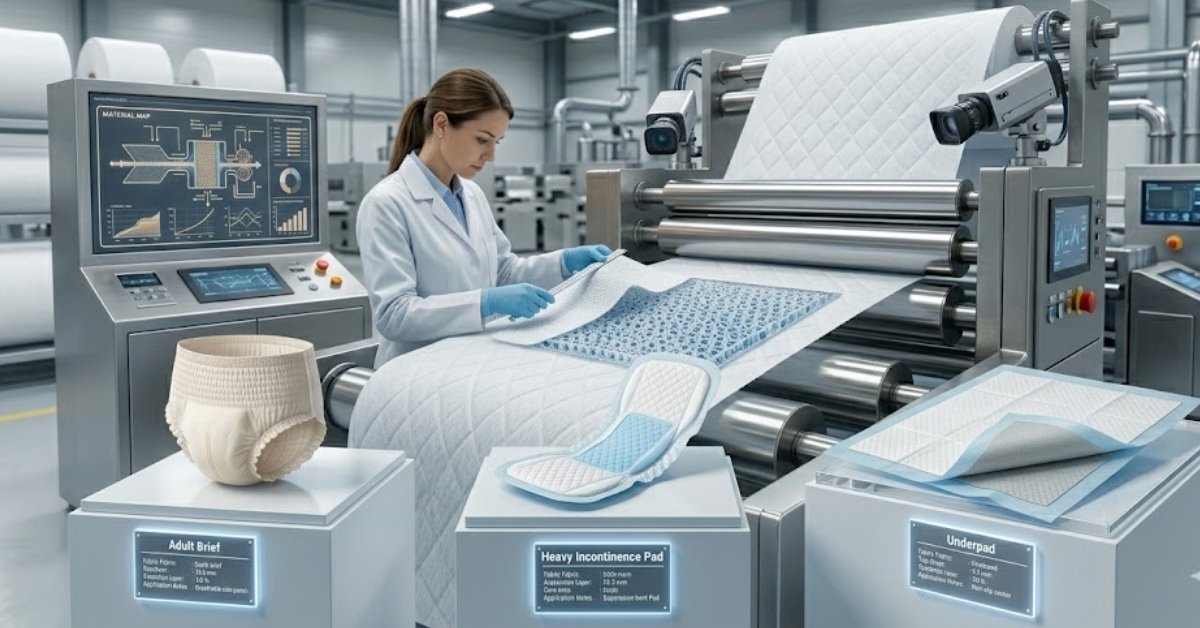
Adult Incontinence Nonwoven Fabric — Supply Guide for Briefs, Pads & Underpads
Introduction The global adult incontinence market is one of the fastest-growing segments in the hygiene…
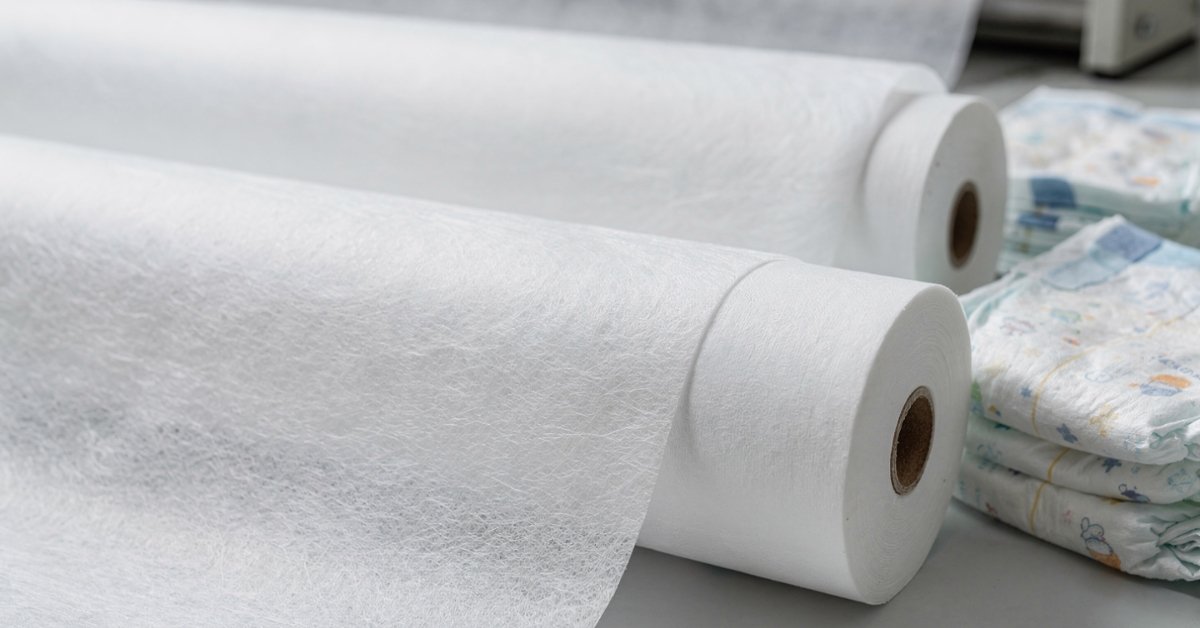
Non-Woven Fabric for Baby Diapers — Complete Guide
The modern baby diaper is a marvel of materials engineering — and at the heart…