



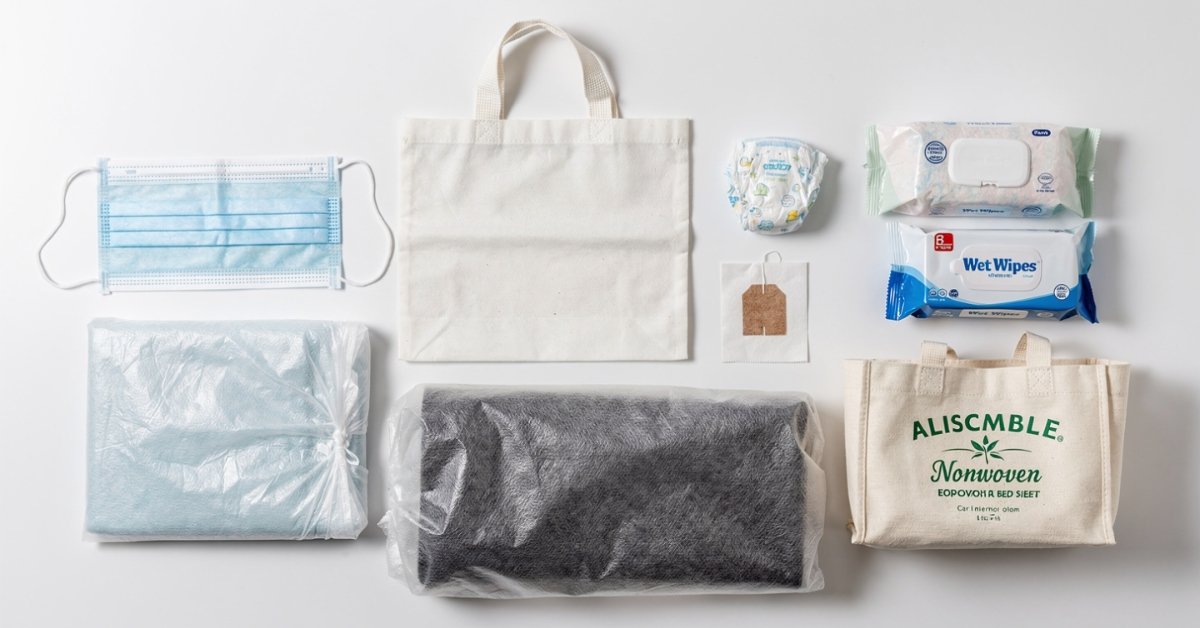
Nonwoven fabric is one of the most widely used materials in modern manufacturing — yet most people never think about it. From the diaper your child wears to the surgical gown your surgeon puts on, from the shopping bag you carry to the road beneath your feet, nonwoven fabric is present in hundreds of products you interact with every day.
This guide from Olefins Private Limited — a specialist nonwoven fabric manufacturer in Pakistan — covers the top 10 applications of nonwoven fabric, explaining why each industry relies on this versatile material and what specifications matter most.
Quick Summary: Top 10 Uses at a Glance
| # | Application | Fabric Type | Typical GSM | Key Requirement |
|---|---|---|---|---|
| 1 | Baby Diapers & Hygiene | Spunbond, SMS, ADL | 8-22 GSM | Softness, Hydrophilic |
| 2 | Surgical Gowns & PPE | SMS / SMMS | 35-55 GSM | Barrier (AAMI Level) |
| 3 | Shopping Bags | Spunbond PP | 60-120 GSM | Tensile, Printable |
| 4 | Agricultural Covers | Spunbond UV | 17-80 GSM | UV Protection, Breathable |
| 5 | Face Masks | SS + Meltblown | 25+25+25 GSM | BFE >95%, 1-5 µm Fibre |
| 6 | Geotextiles | Spunbond PP | 80-200 GSM | Separation, Filtration |
| 7 | Interlinings & Home | Spunbond | 20-80 GSM | Shape Retention |
| 8 | Protective Workwear | SMS / Spunbond | 30-65 GSM | Liquid Repellency |
| 9 | Filtration Media | Meltblown | 20-100 GSM | Fine Filtration, 1-5 µm |
| 10 | Wet Wipes | Spunbond / Spunlace | 40-80 GSM | Wet Strength, Softness |
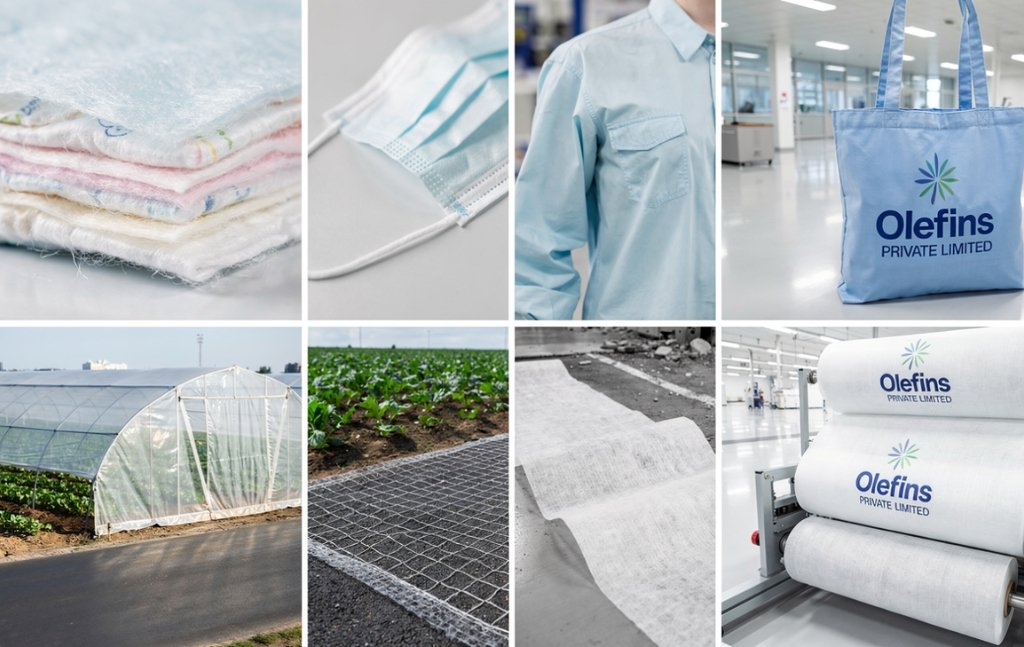
1. Baby Diapers and Hygiene Products
The hygiene industry is the single largest consumer of nonwoven fabric globally. A standard nonwoven fabric for baby diapers contains multiple nonwoven layers: the soft topsheet touching baby’s skin (10–15 GSM hydrophilic spunbond), the backsheet providing moisture barrier (15–22 GSM hydrophobic spunbond), leg cuffs for leakage prevention, and the acquisition layer distributing fluid into the absorbent core. Each layer has precise GSM, softness, and liquid management specifications. Similarly, hygiene nonwoven fabric is used for sanitary napkin nonwoven fabric, adult incontinence nonwoven fabric, and baby wipes.
2. Surgical Gowns and Medical Protective Equipment
Healthcare is the second major nonwoven application. Nonwoven fabric for surgical gowns, isolation gowns, PPE coveralls, surgical drapes, caps, and shoe covers are all manufactured from spunbond or SMS vs SMMS nonwoven fabric. The key requirement for medical nonwoven fabric is barrier performance — blocking liquid penetration, bacteria, and viral particles. SMMS fabric is the gold standard for Level 2–3 surgical gowns, providing both the strength of spunbond outer layers and the filtration efficiency of the meltblown core.
3. Reusable Shopping Bags and Retail Packaging
The global ban on single-use plastic bags has created enormous demand for PP spunbond reusable bags. At 80–100 GSM, spunbond nonwoven is strong enough to carry 5–10 kg loads, lightweight enough to fold into a pocket, and printable in full color for branding. Learn more about nonwoven fabric vs plastic. Bag manufacturers use nonwoven rolls from a specialized nonwoven fabric for bags manufacturer in standard widths, cutting and sewing them into finished bags.
4. Agricultural Covers and Crop Protection
UV-stabilized spunbond PP fabric has transformed commercial farming. Crop cover & mulching nonwoven fabric (17–30 GSM, UV-treated) laid over seedlings and young crops protects against frost, insects, hail, and wind while transmitting 70–90% of sunlight and allowing water through. Weed control mulch (50–80 GSM black spunbond) suppresses weeds without chemicals. Agricultural nonwovens are used in vegetable farming, strawberry cultivation, tobacco growing, and greenhouse horticulture worldwide.
5. Face Masks and Respiratory Protection
The COVID-19 pandemic brought global awareness to nonwoven face masks. A standard 3-layer surgical mask relies on specialized face mask nonwoven fabric: an outer hydrophobic spunbond layer (25 GSM), a middle meltblown filtration layer (25 GSM, BFE >95%), and a soft inner spunbond layer (25 GSM). The critical performance layer is the meltblown — its ultra-fine fibres (1–5 microns) create the electrostatic filtration effect that captures airborne particles and bacteria.
6. Geotextiles for Road and Civil Construction
Heavy nonwoven fabric (80–200 GSM) is used extensively in civil engineering as geotextile. Read our full guide on geotextile nonwoven fabric to see how road construction uses geotextile between the subgrade soil and aggregate layers — the fabric separates layers (preventing mixing), filters drainage water, and reinforces the structure. Slope stabilization, retaining walls, landfill systems, and drainage trenches all rely on geotextile nonwoven. The global geotextile market exceeds USD 10 billion annually.
7. Garment Interlinings and Home Textiles
Apparel manufacturers use nonwoven interlining fabric to provide structure and shape retention in garments. Collar, cuffs, jacket fronts, and shirt plackets are lined with fusible or sew-in nonwoven interlining (20–80 GSM). Home textile applications include nonwoven fabric for furniture, mattress cover backings, quilt batting substrates, pillow filling materials, and sofa/furniture dust covers — all using nonwoven fabric for its cost effectiveness, durability, and non-allergenic properties.
8. Disposable Protective Workwear
Industries from food processing to automotive painting, pharmaceutical manufacturing to chemical handling rely on disposable spunbond or SMS coveralls to protect workers and maintain hygiene standards. PPE coverall nonwoven fabric (30–60 GSM) provides a lightweight, breathable barrier for light-duty applications. SMS coveralls (40–65 GSM) provide moderate chemical splash resistance. Review medical nonwoven fabric certifications for quality assurance.
9. Filtration Media
Meltblown nonwoven fabric is the primary filtration layer in air and liquid filtration applications. Check our spunbond vs spunmelt nonwoven fabric guide to understand how meltblown technology works. HVAC filters, industrial air filters, vacuum cleaner bags, water filtration cartridges, and fuel filters all use meltblown nonwoven for its exceptional particle capture efficiency. The ultra-fine fibre structure creates a tortuous path that captures particles while allowing air or liquid to flow through at acceptable pressure drop.
10. Wet Wipes and Personal Care Substrates
Baby wet wipes, facial wipes, makeup removal wipes, antibacterial hand wipes, and household cleaning wipes all use nonwoven fabric as the substrate. Check our wet wipes nonwoven fabric substrate guide. The fabric (typically 40–80 GSM spunbond or spunlace nonwoven) must be soft, wet-strong (maintain integrity when saturated), absorbent, and compatible with the impregnated liquid formula. Spunlace (hydroentangled) nonwoven is most common for premium wipes; spunbond is used for economy grades.
Frequently Asked QuestionsWhat is the most common use of nonwoven fabric globally?
The hygiene sector is the largest consumer of nonwoven fabric globally. Baby diapers, sanitary napkins, adult incontinence products and wet wipes account for over 35% of global spunbond and spunmelt consumption due to their softness, liquid management and cost-effectiveness.
Which nonwoven fabric GSM is used for shopping bags vs surgical gowns?
Reusable shopping bags typically use 60-120 GSM PP spunbond nonwoven for strength (5-10 kg load capacity) and printability. Surgical gowns use lighter 35-55 GSM SMS or SMMS nonwoven fabric, where the meltblown core (1-5 microns fibre diameter) provides bacterial barrier protection per AAMI Level 2-3 standards.
Is nonwoven fabric washable and reusable?
It depends on the type. PP spunbond shopping bags and geotextiles (80-200 GSM) are washable and reusable for months. Medical disposables like face masks, surgical gowns and diaper topsheets are designed for single-use to maintain hygiene and filtration efficiency (BFE >95%).
What is the difference between spunbond and meltblown nonwoven fabric in face masks?
Spunbond layers (15-25 GSM) provide strength, shape and skin comfort in masks. Meltblown is the middle filtration layer made of ultra-fine 1-5 microns fibres that creates an electrostatic effect to capture airborne particles, bacteria and viruses. A standard 3-layer mask uses Spunbond + Meltblown + Spunbond (SMS) structure.
Can Olefins supply nonwoven fabric for all 10 applications listed?
Yes. Olefins Private Limited manufactures spunbond, SMS and SMMS nonwoven fabric from 8 GSM to 200 GSM in Pakistan for all 10 applications — hygiene, medical, packaging, agriculture, filtration, geotextile, interlining and wipes. Contact info@olefins.net or WhatsApp +92 316 2055400 for GSM samples, wholesale pricing and certifications (ISO, AAMI, EN13795, OEKO-TEX).
What is the most common use of nonwoven fabric globally?
The hygiene sector is the largest consumer of nonwoven fabric globally. Baby diapers, sanitary napkins, adult incontinence products and wet wipes account for over 35% of global spunbond and spunmelt consumption due to their softness, liquid management and cost-effectiveness.
Which nonwoven fabric GSM is used for shopping bags vs surgical gowns?
Reusable shopping bags typically use 60-120 GSM PP spunbond nonwoven for strength (5-10 kg load capacity) and printability. Surgical gowns use lighter 35-55 GSM SMS or SMMS nonwoven fabric, where the meltblown core (1-5 microns fibre diameter) provides bacterial barrier protection per AAMI Level 2-3 standards.
Is nonwoven fabric washable and reusable?
It depends on the type. PP spunbond shopping bags and geotextiles (80-200 GSM) are washable and reusable for months. Medical disposables like face masks, surgical gowns and diaper topsheets are designed for single-use to maintain hygiene and filtration efficiency (BFE >95%).
What is the difference between spunbond and meltblown nonwoven fabric in face masks?
Spunbond layers (15-25 GSM) provide strength, shape and skin comfort in masks. Meltblown is the middle filtration layer made of ultra-fine 1-5 microns fibres that creates an electrostatic effect to capture airborne particles, bacteria and viruses. A standard 3-layer mask uses Spunbond + Meltblown + Spunbond (SMS) structure.
Can Olefins supply nonwoven fabric for all 10 applications listed?
Yes. Olefins Private Limited manufactures spunbond, SMS and SMMS nonwoven fabric from 8 GSM to 200 GSM in Pakistan for all 10 applications — hygiene, medical, packaging, agriculture, filtration, geotextile, interlining and wipes. Contact info@olefins.net or WhatsApp +92 316 2055400 for GSM samples, wholesale pricing and certifications (ISO, AAMI, EN13795, OEKO-TEX).
Olefins manufactures spunbond, SMS, and SMMS nonwoven fabric for all 10 applications above. Explore our product portfolio, check PP nonwoven fabric roll wholesale options, or review nonwoven fabric price per kg. Contact us: info@olefins.net | WhatsApp: +92 316 2055400 for pricing or request a sample online.
Post a comment
Related Posts
How to Choose & Source Nonwoven Fabric Manufacturers in Pakistan: Complete Buyer’s Guide
Sourcing high-quality polypropylene (PP) spunbond and composite nonwoven fabrics from Pakistan requires a strategic approach…
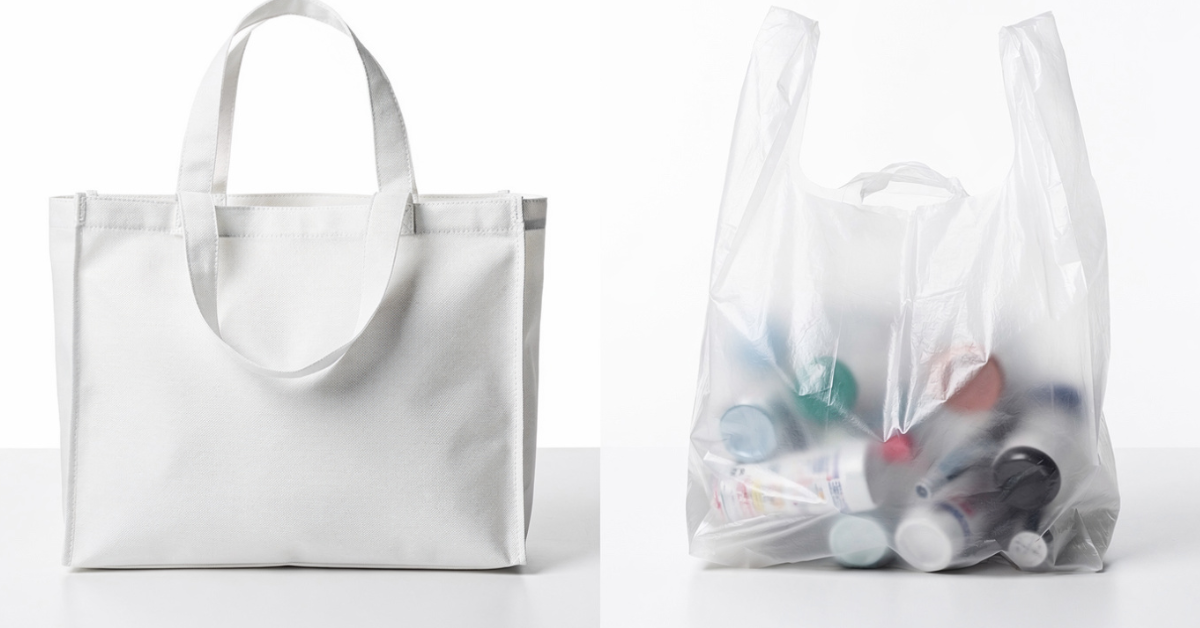
Nonwoven Fabric vs Plastic: Why PP Spunbond is the Smarter Choice
Manufacturers and procurement teams frequently face a choice between polypropylene nonwoven fabric and conventional plastic…
Nonwoven Fabric in Pakistan — Industry Overview & Export Capabilities 2026
Pakistan’s textile industry is one of the largest in the world, contributing over 60% of…
How to Choose a Nonwoven Fabric Manufacturer — 10 Questions to Ask Before Buying
Choosing the wrong nonwoven fabric manufacturer can cost you far more than the difference in…