



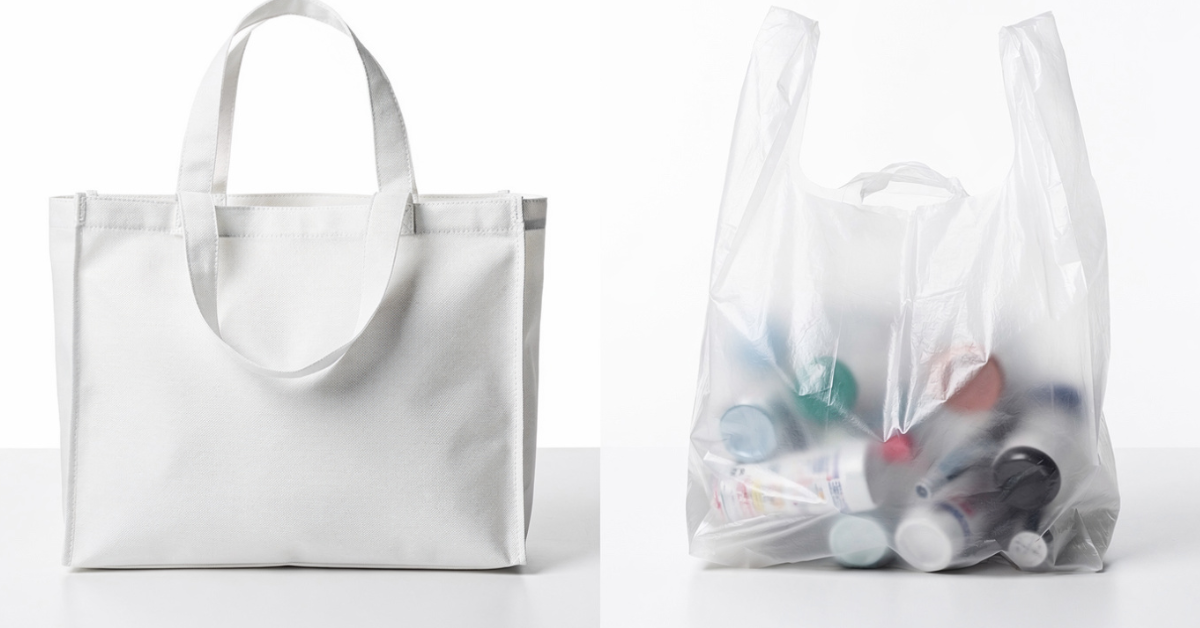
Manufacturers and procurement teams frequently face a choice between polypropylene nonwoven fabric and conventional plastic film for packaging, bags, protective covers, and product components. Both are polymer-based, both are cost-effective, and both come in a range of thicknesses and specifications. But they perform very differently — and the choice between them has significant implications for product performance, regulatory compliance, and brand reputation.
This guide provides a factual, side-by-side comparison to help you choose the right material — covering strength, cost, regulation and the honest environmental trade-offs.
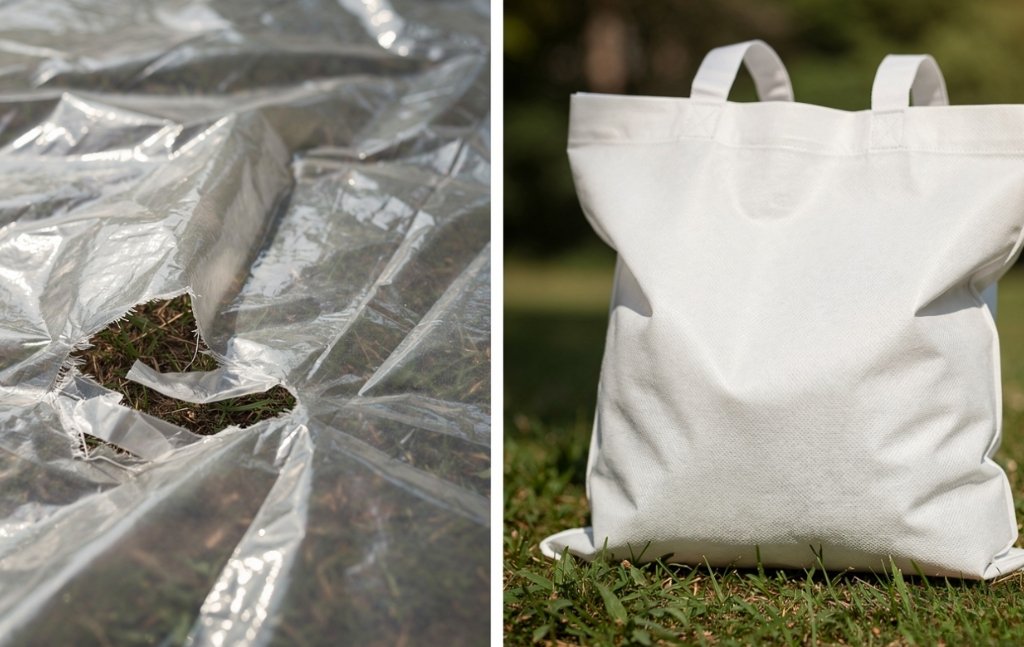
Head-to-Head: Nonwoven Fabric vs Plastic Film
| Property | PP Nonwoven Fabric | Plastic Film (LDPE/HDPE) |
|---|---|---|
| Feel and appearance | Soft, cloth-like, fabric texture | Hard, plastic feel, shiny surface |
| Breathability | Breathable — air passes through | Non-breathable — barrier only |
| Printability | Excellent — screen, flexo, heat transfer | Limited — requires treatment |
| Recyclability | PP Resin #5 — widely recyclable | PE Resin #2/#4 — recyclable but less infrastructure |
| Banned/restricted? | NOT banned — reusable nonwoven bags exempt | Single-use plastic bags BANNED in 60+ countries |
| Strength (per unit weight) | High tensile strength, good tear resistance | Good but delaminates at seams |
| Water resistance | Hydrophobic grades available | Fully waterproof |
| Biodegradability | Not biodegradable (same as plastic) — see honest note below | Not biodegradable |
| Cost comparison | Similar per kg; more material-efficient | Slightly lower per kg in thin gauges |
| Brand perception | Premium, eco-progressive | Increasingly negative — plastic stigma |
The Regulatory Reality — Plastic Bans Worldwide
As of 2026, over 60 countries and dozens of cities have implemented bans or levies on single-use plastic bags and packaging. The EU Single-Use Plastics Directive restricts numerous plastic items. Saudi Arabia, UAE, and Pakistan have all introduced measures to reduce plastic bag use. PP nonwoven reusable bags are explicitly exempt from most plastic bag bans — making them the natural replacement for retail and grocery packaging. This regulatory shift is the primary driver behind rising demand for spunbond PP in the 60–120 GSM bag market.
Why Brands Are Switching to Nonwoven
- Regulatory compliance: Avoid bans without sacrificing packaging functionality
- Brand positioning: Nonwoven bags signal environmental responsibility to consumers
- Reusability: A quality 80 GSM nonwoven bag lasts 50–100+ uses vs one use for plastic
- Printability: Full-color branding on nonwoven produces professional, attractive results
- Customer retention: Branded nonwoven bags keep your company name in front of customers every time they shop
An Honest Note: Is Nonwoven Actually Eco-Friendly?
To reconcile with our sustainability position, we need to be candid: Standard PP nonwoven is NOT biodegradable — just like plastic film. Both are polyolefins. The environmental advantage of nonwoven is not biodegradability, but reusability and recyclability: a single nonwoven bag replaces 50–100 single-use plastic bags, and PP (Resin #5) is 100% recyclable in established industrial streams. It also uses no water in core production, unlike cotton. For a full honest assessment of water use, carbon footprint, microplastics and emerging alternatives like bio-based PP and PLA, see our detailed guide: Is PP Spunbond Nonwoven Fabric Eco-Friendly? An Honest Look.
When Plastic Film Still Makes Sense
Nonwoven is not always the answer. LDPE/HDPE film remains superior for fully waterproof applications (e.g., primary moisture barrier inside cement bags), for ultra-low-cost single-use produce bags where reusability is not required, and where heat-seal transparency is needed. The right choice depends on required barrier, reuse model and local regulation.
Frequently Asked QuestionsIs PP nonwoven fabric completely banned under single-use plastic regulations?
No. Reusable PP nonwoven bags (typically 60+ GSM) and packaging materials are explicitly exempt from single-use plastic bans across most countries and regions, including EU, UAE, KSA and Pakistan, making them a compliant alternative to LDPE bags.
How many times can a standard nonwoven shopping bag be reused?
A high-quality 80 to 100 GSM spunbond nonwoven bag can easily withstand 50 to 100+ uses, offering vastly superior durability and total cost of ownership compared to single-use plastic films.
Does nonwoven fabric offer better print quality than plastic film?
Yes. Nonwoven fabric features a cloth-like texture that absorbs inks evenly, allowing for high-definition screen printing, flexo, and heat transfer branding — a key reason brands switch for retail bags.
Is nonwoven fabric biodegradable or more eco-friendly than plastic?
Standard PP spunbond is not biodegradable — same as LDPE/HDPE film. Its advantage is reusability (50-100 uses) and 100% recyclability (Resin #5), plus no water in production. For a candid assessment of carbon footprint, microplastics and bio-based alternatives, see our Sustainable Nonwoven Fabric guide.
Explore More Guides & Resources
- Check out our pricing details: Nonwoven Fabric Price Per Kg Guide
- Explore bag manufacturing insights: Nonwoven Fabric for Bags Manufacturer
- Read about environmental aspects: Sustainable Nonwoven Fabric: Is PP Spunbond Eco-Friendly?
- Learn about regional sourcing: Sourcing Nonwoven Fabric From Pakistan
- Review the complete buyer manual: How to Choose & Source Nonwoven Fabric Manufacturers in Pakistan: Complete Buyer’s Guide
Is PP nonwoven fabric completely banned under single-use plastic regulations?
No. Reusable PP nonwoven bags (typically 60+ GSM) and packaging materials are explicitly exempt from single-use plastic bans across most countries and regions, including EU, UAE, KSA and Pakistan, making them a compliant alternative to LDPE bags.
How many times can a standard nonwoven shopping bag be reused?
A high-quality 80 to 100 GSM spunbond nonwoven bag can easily withstand 50 to 100+ uses, offering vastly superior durability and total cost of ownership compared to single-use plastic films.
Does nonwoven fabric offer better print quality than plastic film?
Yes. Nonwoven fabric features a cloth-like texture that absorbs inks evenly, allowing for high-definition screen printing, flexo, and heat transfer branding — a key reason brands switch for retail bags.
Is nonwoven fabric biodegradable or more eco-friendly than plastic?
Standard PP spunbond is not biodegradable — same as LDPE/HDPE film. Its advantage is reusability (50-100 uses) and 100% recyclability (Resin #5), plus no water in production. For a candid assessment of carbon footprint, microplastics and bio-based alternatives, see our Sustainable Nonwoven Fabric guide.
Olefins manufactures PP spunbond nonwoven fabric for bags, packaging, and protective covers. Available in 60–120 GSM, any Pantone color, bulk rolls for bag manufacturers. Contact us: info@olefins.net | WhatsApp: +92 316 2055400.
Post a comment
Related Posts
How to Choose & Source Nonwoven Fabric Manufacturers in Pakistan: Complete Buyer’s Guide
Sourcing high-quality polypropylene (PP) spunbond and composite nonwoven fabrics from Pakistan requires a strategic approach…
Nonwoven Fabric in Pakistan — Industry Overview & Export Capabilities 2026
Pakistan’s textile industry is one of the largest in the world, contributing over 60% of…
How to Choose a Nonwoven Fabric Manufacturer — 10 Questions to Ask Before Buying
Choosing the wrong nonwoven fabric manufacturer can cost you far more than the difference in…
Top 10 Uses of Nonwoven Fabric in Everyday Products — 2026 Guide
Nonwoven fabric is one of the most widely used materials in modern manufacturing — yet…